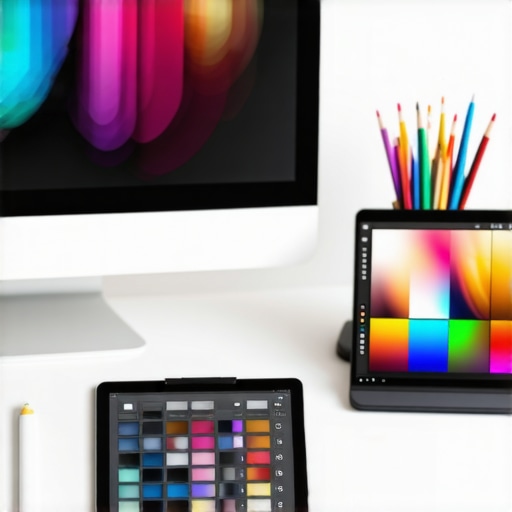
I still vividly remember the moment I stared at my monitor, frustrated and squinting, wondering why the colors on my screen looked nothing like the real-life hues I was trying to match. It felt like trying to paint a masterpiece with a dull, off-tuned piano—impossible to get the harmony right. That lightbulb moment hit me hard: my outdated display wasn’t just a minor inconvenience; it was a significant barrier to my creative and professional productivity.
Why Reliable Color Accuracy Changes Everything for Creatives and Professionals
In today’s competitive landscape, the quality of your work hinges on more than just skills—your tools matter. A truly top-tier color-accurate monitor can mean the difference between a project that looks professional and one that falls flat due to color mismatches. From designing logos to editing photos, accurate color reproduction is essential. Yet, so many overlook this crucial aspect, settling for cheap displays that distort hues and compromise their work.
Still Skeptical About Investing in a Premium Monitor?
Here’s the truth: I once bought a budget screen, convinced I was saving money. But I ended up wasting hours redoing work that looked fine on my monitor but was off once printed or viewed elsewhere. Early on, I made the mistake of ignoring calibration and neglecting color accuracy, thinking my workflow wouldn’t be affected. But as my projects became more demanding, the mismatch became glaringly obvious. That experience drove me to explore the best options for 2025, and I found that investing in the right monitor isn’t just a luxury—it’s a necessity. Want to see how to choose the right one for your needs? Check out our comprehensive guide on top color accurate monitors for creative professionals in 2025.
Now, let’s get into what makes a monitor truly stand out and how to select the best model to elevate your work. Ready? Let’s dive into the practical steps so that you can finally say goodbye to color frustrations and hello to seamless workflows.
Set Clear Priorities for Your Workspace
Start by defining what you need from your monitor. Are you a creative professional needing color precision, or a developer focused on screen real estate? For example, I once switched from a standard display to a 4K color-accurate monitor for my photo editing tasks, which immediately improved my workflow. Clarifying your goals guides your specific choices in size, resolution, and features.
Prioritize Color Accuracy with Proper Calibration
Invest in a reliable calibration tool such as a hardware colorimeter. Connect it to your monitor, run the calibration software, and follow the prompts to create a custom color profile. For instance, I calibrated my monitor after purchase, which corrected color mismatches I hadn’t noticed. Regular recalibration (monthly or quarterly) ensures consistent accuracy—think of it as tuning a musical instrument for perfect harmony in your work.
Choose the Right Monitor for Your Needs
Selection depends on your specific tasks. For creative work, a color-accurate 4K monitor with wide color gamut and high bit-depth is ideal. If your focus is on multitasking, a dual monitor setup increases efficiency. Use the specific guides to narrow down options that match your workflow, similar to how I selected a curved ultrawide for immersive design work, which doubled my productivity.
Implement a Dual Monitor Arrangement
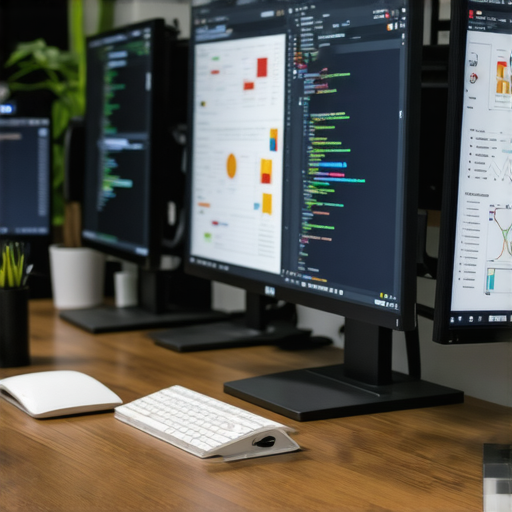
Set up two monitors side-by-side, aligning their heights for seamless viewing. Use a monitor arm to reduce clutter and adjust angles for comfort. For example, I adopted a dual 27-inch setup, which allowed me to code on one screen and reference documents on the other, cutting my switching time drastically. Explore guides on dual monitor configurations for the best ergonomic practices.
Utilize Proper Color Management Software
Software like DisplayCAL or CalMAN helps manage color profiles and calibration data. After calibration, save the profile and set it as the default. This ensures your colors stay consistent across applications. In my case, adjusting color profiles after upgrading my monitor prevented discrepancies between Photoshop and my browser, maintaining visual fidelity at all times.
Optimize Brightness and Contrast Settings
Adjust these manually to suit your ambient lighting. Use a neutral gray background to test uniformity. For instance, I dimmed my workspace lights when working late at night, optimizing my monitor’s settings to reduce eye strain without sacrificing color accuracy. Consistent, comfortable viewing conditions enhance focus and reduce fatigue.
Experiment with Monitor Positioning and Ergonomics
Position your monitor about 20 inches away, with the top at eye level. Use adjustable stands or mounts. Once, I spent a day tweaking my monitor height, which eliminated neck strain during long sessions, allowing me to work more comfortably and efficiently. Proper ergonomic setup directly impacts productivity and health.
Regularly Review Your Setup and Update Tools
Technology advances quickly; revisit your setup annually. Upgrade to newer monitors with improved color accuracy or resolution when feasible. I’ve periodically revisited my workspace, swapping older screens for models like those featured in top 4K color-accurate monitors. Staying current ensures your workflow benefits from the latest technological improvements, keeping your work at professional standards.
Many assume that simply upgrading to a 4K monitor or adding a second display will automatically boost productivity. But in my experience, there’s often more beneath the surface—and overlooking these nuances can lead to disappointment and wasted investments. One common misconception is that larger screens or higher resolutions alone guarantee better performance. While these features are important, they don’t address the core issue of how well the monitor aligns with your workflow and color accuracy needs. As detailed in expert analyses, understanding the coherence between your monitor’s capabilities and your specific tasks will maximize actual efficiency, not just perceived specs. For instance, a high-resolution display with poor color calibration can be more of a distraction than a benefit, especially for creative professionals who rely on accurate hues. Moreover, many underestimate the importance of ergonomic factors and proper calibration routines, which are crucial for long-term health and consistent output. An advanced mistake is assuming all dual setups are equal; however, the placement, color consistency, and synchronization between monitors drastically influence the seamlessness of your workflow. Far beyond the basic setup, integrating color management software and opting for monitors with identical specs can prevent inconsistent color shifts, which otherwise can severely hinder productivity. To deepen your understanding, consider the sophisticated question: How does monitor uniformity influence color-sensitive workflows, and what steps can you take to mitigate discrepancies? Experts suggest that uneven brightness or color tint across a screen can cause eye strain and lead to inaccuracies, particularly during extended editing sessions. Therefore, opting for monitors with high uniformity ratings and regularly recalibrating them is essential. The truth is, most people fail to recognize these subtleties, which often results in expensive mistakes and sub-optimal work quality. So, next time you’re upgrading your workspace, ask yourself: are you considering these nuanced factors, or just the surface-level specs? If you want to explore more about choosing monitors that truly match your needs, check out our comprehensive guide on selecting the right office monitor for your workflow. Don’t forget—small details like calibration routines and uniformity can make a big difference. Have you ever fallen into this trap? Let me know in the comments.
Ensuring your office monitor, especially a high-quality 4K or color-accurate model, remains in top shape over time is crucial for sustained productivity and precision. One of my go-to strategies is using hardware calibration devices like the X-Rite i1Display Pro. I calibrate my monitor monthly, which helps preserve color accuracy and consistent brightness. This routine might seem tedious initially, but it prevents the drift that can occur due to ambient lighting changes or device aging.
Furthermore, employing software solutions such as DisplayCAL provides a free, detailed interface for calibration profiles. These tools allow precise adjustments for gamma, white point, and luminance, which are vital for creative professionals relying on color fidelity. I personally set up my calibration schedules and profiles to automatically load at system startup, simplifying ongoing maintenance.
Long-term results depend heavily on regularly updating your monitor’s firmware if supported. Manufacturers often release firmware updates aimed at fixing bugs and sometimes improving color stability. Staying connected with the manufacturer’s support forums or subscribing to their update alerts can save you from unnoticed issues that impair performance.
How do I maintain my monitor’s quality over time?
A practical tip I recommend is creating an optimized workspace lighting environment. Using bias lighting behind your monitor reduces eye strain and minimizes reflections, which can distort perceived colors. This practice not only stabilizes your perception but also extends the life of your display by reducing the strain on its internal components, especially when paired with good ventilation.
In terms of scaling, integrating dual monitors with synchronized calibration ensures a seamless workflow. When both displays exhibit uniform color and brightness, switching between screens feels natural, maximizing efficiency. I’ve adopted dual 27-inch color-accurate monitors that I calibrated simultaneously, streamlining my editing and coding tasks. For guidance on setting up such configurations, check out these ideas for dual monitor setups.
Looking ahead, I believe the trend toward smarter display maintenance will accelerate, with AI-driven color management tools that predict and correct drift before it affects your work. Investing in such future-proof tools now will keep your workspace aligned with the industry’s cutting-edge standards.
For instance, the details outlined in the tech documentation from display calibration experts emphasize the importance of routine checks. I strongly encourage you to try incorporating regular calibration into your maintenance routine—your work will thank you for it.
Over the years, I’ve learned that the most impactful changes often come from unexpected lessons. One of the earliest mistakes I made was believing that simply acquiring a high-resolution monitor would magically improve my productivity. It wasn’t until I faced persistent color mismatches and ergonomic issues that I realized the importance of understanding the nuances behind a truly effective workspace. These insights didn’t just elevate my work—they reshaped my entire approach to choosing and maintaining office monitors.
What I Wish I Knew Before Investing in a Creative Monitor
- I underestimated the importance of consistent calibration routines. Investing in a good calibration device and regular maintenance kept my colors true, avoiding costly reworks.
- The ergonomic setup is just as crucial as the monitor’s specs. Adjusting my monitor height and viewing angle prevented fatigue and boosted focus.
- A monitor with high uniformity and low color shift across the screen saved hours of frustration. It turned out that not all displays with similar specs perform equally in real-world tasks.
- Dual monitor setups improve efficiency dramatically—if both displays are calibrated and synchronized correctly. Proper positioning reduces eye strain and enhances workflow fluidity.
Tools and Resources That Changed My Perspective
My go-to calibration hardware is the X-Rite i1Display Pro. It’s reliable, precise, and helps maintain color integrity over time, which is vital for creative work. I also rely on free software like DisplayCAL for routine calibration and troubleshooting. For reading about ergonomic best practices, I often revisit guides from industry experts, which give me fresh ideas to optimize my workspace continually.
Your Next Step to Better Workflow Starts Now
Remember, the journey to an ideal setup isn’t just about the latest tech but also about understanding your unique needs and investing in proper maintenance. High-quality monitors, when paired with routine calibration and ergonomic awareness, can unlock new levels of productivity and creative excellence. Don’t hesitate to experiment and refine your environment; every small adjustment counts toward working smarter, not harder. Ready to elevate your workspace with a color-accurate monitor? Share your experiences or questions below—I’d love to hear your story!
,