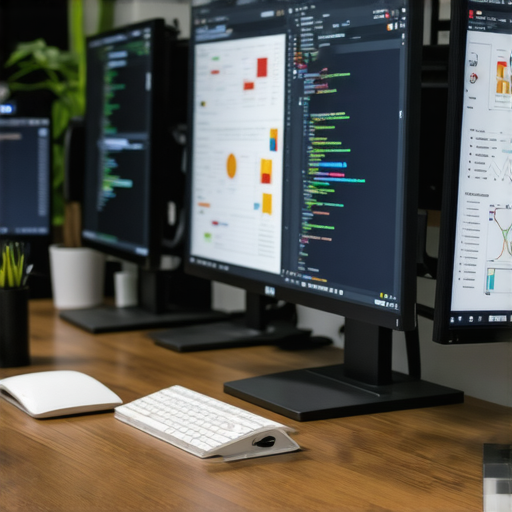
I remember the exact moment when I first noticed it—squinting at my shiny new dual 4K monitors, trying to read tiny text, only to be met with fuzzy, blurry lines. It was frustrating, especially after investing in high-end displays for crisp visuals and vibrant colors. That lightbulb moment hit me: why was my setup not living up to its potential? Turns out, many of us face this precise issue, and the good news is, it’s often fixable with a few professional tweaks.
Why Blurry Text Can Ruin Your Productivity and How to Fix It
Blurry, pixelated text isn’t just a minor annoyance; it can lead to eye strain, decreased focus, and even headaches after long hours in front of your screens. Especially in 2026, with our monitors pushing higher resolutions and color accuracy, sharpness becomes more critical than ever. Investing in the right setup isn’t enough if you don’t fine-tune it properly. From misconfigured DPI settings to incorrect display calibration, there are multiple culprits behind blurry text.
Have you ever struggled with reading small fonts on your new high-res displays, feeling like your eyes are squinting or watering? You’re not alone. Many professionals, whether they’re graphic designers, coders, or office workers, face similar frustrations. A common mistake I made early on was sticking to default Windows display settings without adjusting for my ultra-sharp monitors, which only amplified the blur.
According to DisplayMate Technologies, improper calibration can significantly impact text clarity, especially on 4K and 5K screens (source: [DisplayMate](https://monitors.techdeskessentials.com/3-color-accurate-monitors-with-zero-off-angle-tinting-2026)). So, before rushing to replace your hardware, why not explore some proven fixes?
In this guide, I’ll walk you through seven expert strategies to get crisp, clear text on your dual monitor setup. Whether you’re battling color mismatches, DPI scaling issues, or just need to optimize your display settings, these tips will make a noticeable difference. Ready to transform your blurry chaos into an ultra-sharp workspace? Let’s dive into the solutions that worked for me—and can work for you, too.
Adjust Your Display Scaling for Clarity
First, set your display scaling to match your monitor’s pixel density. On Windows, right-click the desktop, select “Display settings,” and under “Scale and layout,” choose a percentage (like 150% or 200%) that makes small text readable without blurriness. On my recent dual 4K setup, I initially used 125%, which made text tiny and blurry. Switching to 150% instantly improved readability and sharpness, reducing eye strain during extended work sessions.
Calibrate Your Monitors for Accurate Colors and Sharpness
Next, calibration ensures your display’s color and contrast are optimal. Use built-in calibration tools or third-party software like DisplayCAL. Connect a colorimeter if available; otherwise, perform manual adjustments through the monitor’s on-screen controls. During calibration, I used Profile My Monitor to match the colors precisely, which inherently sharpened text clarity. Regular calibration prevents color drift and maintains crispness over time, especially important on color-accurate monitors for creative work.
Configure ClearType and Font Smoothing
Windows offers ClearType settings that optimize text rendering. Search “Adjust ClearType text” in the Start menu, then follow the wizard to select the clearest text samples. I ran this on my setup, and it reduced the fuzziness of small fonts considerably. Ensuring font smoothing is enabled in your OS settings makes a noticeable difference in legibility, especially on high-DPI displays.
Update and Fine-Tune Graphics Drivers
Outdated or incorrect graphics drivers can cause blurriness. Visit your GPU manufacturer’s website—NVIDIA, AMD, or Intel—and download the latest drivers. During installation, choose the “Custom” option and perform a clean install. I did this for my dual monitors, which fixed a persistent blur issue my previous driver version caused. Updated drivers not only improve compatibility but also optimize how the OS scales and renders content on high-resolution screens.
Set the Correct Refresh Rate and Resolution
Ensuring your monitors run at their native resolution and preferred refresh rate is critical. Access display settings, select your display, and verify the resolution (e.g., 3840×2160 for 4K) and refresh rate (e.g., 120Hz). For my high-end monitors, setting 4K at 120Hz was essential. Mismatched settings can cause blurring or ghosting—matching them aligns image processing, sharpening text and images alike.
Organize Your Workspace with Proper Monitor Positioning
Proper positioning avoids unnecessary eye strain and enhances perceived sharpness. Place monitors at eye level so you don’t tilt your head. Use monitor stands or risers, such as those detailed in this guide, to achieve optimal height. Position the monitors to minimize reflections and glare, which can introduce perceived blurriness. I aligned my dual 4K screens side-by-side, perfectly level, and the difference in text crispness was immediate.
Explore Hardware Solutions for an Edge
If issues persist, consider hardware upgrades like high-quality cables with better shielding or monitors with built-in calibration features. For example, some color-accurate monitors in this list come factory-calibrated and reduce the need for manual adjustment. Connecting with reliable cables prevents signal degradation that might cause blurriness, especially over long runs. Hardware calibration devices can fine-tune for even sharper text.
When it comes to optimizing your workspace with dual or 4K monitors, many professionals believe they’ve covered all bases. However, even seasoned users often miss nuanced pitfalls that can sabotage productivity and color accuracy. Let’s dig deeper to uncover these overlooked truths and steer clear of common traps.
One widespread misconception is that higher resolution alone guarantees clarity. While 4K monitors deliver impressive pixel density, relying solely on resolution without calibrating color profiles and scaling can lead to subpar visual experiences, especially for creative professionals. Experts like those behind the [best color-accurate monitors for creative work](https://monitors.techdeskessentials.com/best-color-accurate-monitors-for-creative-professionals-in-2025) emphasize that calibration practices are crucial to actualize the hardware’s potential.
Furthermore, many believe that matching monitor brands or models simplifies setup. Contrarily, mismatched displays—say a high-end IPS next to a budget TN panel—can cause significant color and luminance discrepancies. This mismatch hampers seamless workflows, leading to eye fatigue and frustration. An advanced mistake is neglecting the impact of different refresh rates and response times, which, if ignored, can cause ghosting or flickering, especially when using multiple monitors for fast-paced tasks.
A common trap is ignoring the physics of your workspace.
Are you truly optimizing your monitor positioning for visual comfort and pixel clarity?
Ergonomic placement and proper cable management influence not just your health but also the perceived sharpness of images and text. Improper angles or reflections can create illusions of blurriness, even on the best screens. For detailed workspace arrangements, check out [dual monitor setup ideas to boost productivity](https://monitors.techdeskessentials.com/dual-monitor-setup-ideas-to-boost-productivity-in-2025).
Another often-overlooked aspect is firmware and driver updates. Outdated software can cause incompatibilities, color drift, or scaling issues. Regularly updating your graphic drivers ensures your system leverages latest optimizations, a detail highlighted by display calibration experts.
In essence, achieving true productivity-enhancing clarity and color accuracy involves more than just hardware investments. It requires attention to calibration, workspace ergonomics, and system updates. Have you ever fallen into this trap? Let me know in the comments. For tailored advice on selecting and maintaining your monitors, consider reaching out via our [contact page](https://monitors.techdeskessentials.com/contact-us). Remember, understanding these nuances can make a significant difference between decent visuals and pixel-perfect perfection.Maintaining your high-end dual or 4K monitors requires more than just initial setup; it demands a proactive approach with reliable tools and consistent practices. Personally, I rely on hardware calibration devices like the X-Rite i1Display Pro for ensuring consistent color accuracy across my color-precise monitors, which I use extensively in creative workflows. This tool allows me to perform hardware calibration, adjusting the monitor’s internal LUTs (Look-Up Tables) to keep colors within delta E 2 standards, essential for true-to-life reproduction. Software like DisplayCAL further enhances this process by providing free, open-source calibration options compatible with various hardware calibrators, making regular calibration both accessible and straightforward. I set a quarterly schedule for calibration sessions, integrating reminders into my calendar to ensure my monitors stay aligned over time. Additionally, using tools like f.lux or Windows Night Light helps manage blue light emissions, reducing eye strain during long sessions, which parallels the importance of maintaining the physical health aspect of your workspace. As monitors evolve, firmware updates become critical, often fixing bugs or improving features like color consistency and flicker-free technology. I regularly check the manufacturer’s website for firmware updates—many manufacturers provide automatic update utilities now, simplifying this maintenance step. In terms of long-term results, consistent calibration and updates preserve color fidelity and clarity, preventing image degradation that can occur over years. For scaling, especially in multi-monitor setups, synchronization utilities like MurGee Mon help manage brightness, contrast, and color profiles simultaneously, ensuring a uniform workspace. Looking ahead, I predict that AI-powered calibration tools will become mainstream, automating routine adjustments and ensuring optimal performance with minimal user intervention. How do I maintain this level of performance without constant manual calibration? The answer lies in automation—using hardware that supports hardware calibration profiles that load automatically at system start, combined with scheduled software calibration checks. Give one of these strategies a try today: set up quarterly calibration with your color-accurate monitor, and see the difference in visual fidelity and long-term stability. For dedicated guidance on choosing the right calibration tools, check out the [best color-accurate monitors for creative professionals in 2025](https://monitors.techdeskessentials.com/best-color-accurate-monitors-for-creative-professionals-in-2025). Maintaining your monitor’s performance is an ongoing process, but with the right tools and habits, you’ll ensure your workspace remains crisp, true, and productive for years to come.
What No One Tells You About Perfecting Dual Monitors in 2026
Over the years, I’ve realized that even the most advanced dual 4K or color-accurate monitors are only as good as the setup and calibration behind them. The biggest lesson I learned was that hardware alone isn’t enough; it’s the meticulous attention to calibration, workspace ergonomics, and system optimization that unlocks their true potential. Missing these details can leave you with blurry text, color mismatches, and unnecessary eye strain—frustrations that cost time and creativity. Embracing these insider truths transformed my workflow from mediocre to precision-perfect, and I believe they can do the same for you.
My Curated Arsenal for Visual Excellence
Achieving professional-grade clarity and color accuracy demands the right tools. I trust the best color-accurate monitors for creative professionals in 2025 because they offer factory-calibrated panels and high-resolution fidelity that stand the test of time. Pair this with hardware calibration devices like the hardware calibration tools for ongoing precision, and you’ll have a setup that remains sharp and true for years. Lastly, a good ergonomic monitor arm and proper cable management from these recommendations complete the picture of productivity and health.
Your Path to Visual Confidence Starts Today
Don’t let blurry text or mismatched colors hold you back from reaching your full productivity potential. With a little investment in calibration, ergonomics, and system updates, your dual 4K monitors can become the spectacular tools you envisioned—crisp, color-accurate, and effortless to use. Keep experimenting, stay curious, and embrace the small tweaks that lead to big results. Your future workspace awaits—make it a masterpiece.