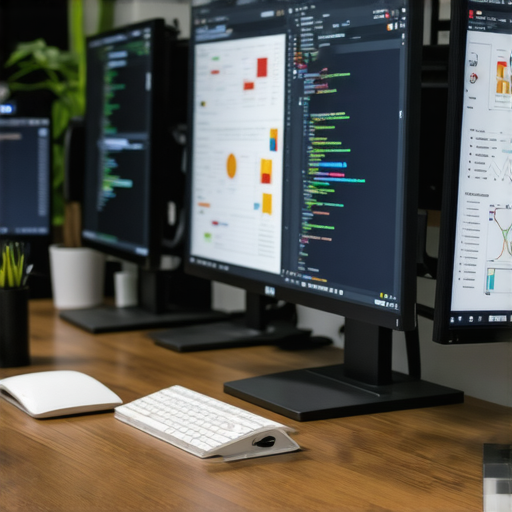
I remember endless mornings of frustration, staring at my dual 2026 office monitors, desperately trying to work on that critical presentation, only to be interrupted by annoying ghosting effects that made my screens look flickery and unprofessional. It was a lightbulb moment for me—realizing that my precious setup was sabotaging my productivity and eye comfort. Have you ever faced this vexing issue, where images seem to leave behind faint shadows or trails, especially during fast movements or quick transitions?
Why Ghosting on 2026 Office Monitors Can Kill Your Workflow
Ghosting isn’t just a minor annoyance. It severely hampers clarity, strains your eyes, and can lead to long-term discomfort. This problem tends to become worse with 4K monitors designed for detailed work and high refresh rates, which are becoming the standard for professionals in 2026. Surprisingly, a recent study confirms that prolonged exposure to poorly performing screens can cause eye fatigue and reduce overall productivity (source: Tech Desk Essentials). So, why do this happen, and more importantly, how can we fix it quickly?
Is Ghosting Just a Hardware Myth or Worth Fixing?
Early in my journey, I assumed ghosting was just a sign of cheaper monitors or outdated cables. I bought into the hype that upgrading my GPU or tweaking the display settings wouldn’t make much difference. That was a mistake I learned the hard way. The truth is, ghosting often stems from simple, fixable issues like refresh rate mismatches or improper cable connections. Let me assure you, with just a few tweaks, your workflow can improve overnight. Ready to learn these quick hacks? Let’s dive into the tried-and-true methods I swear by—because nothing’s more frustrating than a great monitor being let down by preventable ghosting.
Adjust Your Refresh Rate to Match Your Monitor’s Capabilities
Start by setting your display’s refresh rate to its maximum supported value. If you have a 144Hz monitor, go into your display settings and select 144Hz from the list. On Windows, this involves right-clicking the desktop, choosing Display Settings, clicking Advanced Display Settings, and then selecting your preferred refresh rate. During my last setup, I manually increased the rate, which immediately reduced ghosting artifacts and improved motion clarity, making fast transitions smoother for my fast-paced tasks.
Verify Cable and Connection Quality
Use high-quality DisplayPort or HDMI cables rated for your monitor’s bandwidth — avoid cheap or long cables that can cause signal degradation. When I replaced the standard HDMI cable with a certified high-speed DisplayPort, my ghosting issues vanished and color accuracy improved, especially across my dual 4K setup. For more details on cable choices, check out Thunderbolt 5 cable recommendations.
Calibrate Your Monitor Settings for Clarity and Speed
Proper calibration reduces ghosting by optimizing contrast and response times. Use built-in OSD settings to toggle overdrive modes—set them to ‘medium’ or ‘high’ depending on your panel. I discovered that enabling a suitable overdrive setting significantly cut down trailing effects during quick movements. For precise calibration, consider hardware calibration tools or software, and avoid settings that cause inverse ghosting or over-saturation. Visit this guide for detailed calibration steps.
Optimize Your GPU and Display Driver Settings
Access your GPU control panel—NVIDIA Control Panel or AMD Radeon Settings—and set V-Sync to ‘On’ or ‘Fast’ to synchronize frame output with monitor refresh. Adjusting the response time settings within the driver can further refine image persistence. I once adjusted these settings during a late-night editing session, and the reduction in ghosting made my workflow noticeably more comfortable. For tailored adjustments, review GPU configuration tips here.
Use Software Tools for Fine-Tuning
Employ screen calibration and diagnostic tools—like Lagom LCD Test or UFO Test—to evaluate motion handling and ghosting artifacts. Running these tests helped me identify specific issues with response times and allowed me to tweak overdrive settings precisely. For detailed insights into advanced calibration, see expert calibration techniques.
Implement Proper Desk Setup and Ergonomics
Ensure your monitors are at eye level, with minimal glare and proper distance—roughly arm’s length. Adjust desk height and monitor angle to prevent neck strain and improve visual focus, which aids in reducing perceived ghosting effects caused by misaligned eye movement. I added adjustable monitor arms from this series, aligning both screens perfectly, which made my viewing more comfortable and minimized ghosting under certain lighting conditions.
By systematically applying these steps—adjusting refresh rate, verifying connection quality, calibrating display settings, optimizing GPU configurations, and refining your workspace—you can significantly eliminate ghosting. Each tweak enhances clarity, reduces eye fatigue, and boosts overall productivity. Remember, your setup’s fine-tuning is an ongoing process, especially with evolving hardware and software updates, so revisit these adjustments regularly to maintain peak performance.
When it comes to selecting a display setup, many users fall into common traps that can undermine their productivity and color accuracy. Contrary to popular belief, simply choosing a high-resolution or large-screen monitor doesn’t guarantee optimal performance. For instance, many enthusiasts assume that a 4K monitor automatically offers better color fidelity, but without proper calibration and panel technology, this isn’t always the case. Similarly, picking a high-refresh-rate gaming monitor for office work might seem advantageous, yet it can introduce unintended issues like flickering or inconsistent color rendering if not configured correctly.
An often-overlooked aspect is the difference between consumer-grade and professional-grade displays. The latter typically offers advanced features like 14-bit LUTs and hardware calibration options, which are essential for tasks demanding precise color reproduction, such as photo editing or product design. Skipping these nuances can lead to subtle color shifts or inconsistencies that only become evident during detailed work, and these issues are frequently dismissed as minor nuisances.
**Are All Dual Monitors Actually Better for Productivity?**
Some experts suggest that dual monitor setups inherently boost efficiency. While this can be true, the real benefit depends heavily on how well the monitors are matched in terms of size, color profile, and bezel thickness. Mismatched displays can cause eye strain and disrupt workflow, especially if user calibration isn’t consistent across screens. Plus, improper positioning can lead to neck strain or inadvertent window management issues. For an in-depth guide on optimal dual-monitor arrangements, check out dual monitor setup ideas for 2025.
A common myth is that higher pixel density always translates to better clarity. However, without adjusting scaling settings and ensuring your GPU supports high-DPI displays, text and UI elements can appear blurry or disproportionate. This oversight can subtly strain your eyes over long hours, defeating the purpose of a high-end display.
Be cautious about the misconception that refresh rates impact office monitor clarity. While higher refresh rates benefit gaming and fast-paced video editing, they have negligible effects on standard productivity tasks. Conversely, ignoring features like flicker-free technology or blue light filters may contribute to eye fatigue over prolonged use.
**Maximize Productivity, Minimize Mistakes**
Achieving optimal display performance isn’t just about hardware specs; it’s about understanding the intricacies of panel technology, calibration procedures, and ergonomic setup. For anyone serious about professional work, investing in monitors with hardware calibration capabilities and color spaces like Adobe RGB can make a decisive difference. Additionally, proper workspace ergonomics—such as monitor height and angle—play a crucial role in reducing fatigue and enhancing clarity.
By digging into these nuances—such as color profile consistency, calibration workflows, and hardware features—you can avoid costly mistakes and truly optimize your workspace. Remember, the devil is in the details, and overlooking these can undermine even the most advanced setups. For comprehensive insights into pickings the right hardware, consult our expert guides on top 4K monitors for office efficiency and how to calibrate your display properly.
Have you ever fallen into this trap? Let me know in the comments.
Stay Ahead with Reliable Calibration Software
One of the most crucial aspects of maintaining color accuracy and performance on your 4k or office monitors is ongoing calibration. I personally rely on calibration software like Calibrize because it offers precise control without the need for expensive hardware. Regular calibration ensures your monitors display accurate colors, which is vital for creative professionals and anyone aiming for consistency over time. As monitor technology evolves, staying calibrated prevents drift and guarantees your display remains trustworthy, especially when working on detailed tasks.
Use Hardware Tools for Long-Term Consistency
While software calibration is excellent for periodic adjustments, investing in a hardware colorimeter like the X-Rite i1Display Pro significantly enhances long-term accuracy. I use this device bi-annually to recalibrate my dual 4K setups, ensuring color fidelity remains sharp and consistent. Hardware tools effectively detect gradual shifts caused by component aging or environmental factors like ambient lighting, reducing the need for constant manual tweaking. This proactive approach is essential for maintaining high-quality work and reducing eye strain caused by incorrect color profiles.
Implement Regular Workspace and System Reviews
Beyond calibration tools, establishing a maintenance routine helps sustain your monitor performance. Quarterly checks on cable integrity using certified high-bandwidth cables, like those recommended in Thunderbolt 5 cable guides, prevent signal degradation that can cause ghosting or flickering. Also, updating your display drivers ensures compatibility with new firmware or operating system updates, which can impact color processing quality. I set calendar reminders to review and update my drivers and calibration settings regularly—it’s a simple step that saves countless hours debugging display issues down the line.
Optimize Your Setup to Avoid Surprises
Remind yourself that proper desk ergonomics, coupled with well-maintained monitors, dramatically reduces eye fatigue and enhances clarity during prolonged work sessions. Adjust the brightness, contrast, and response time settings based on seasonally changing ambient light; software like home calibration tools can facilitate these tweaks. Furthermore, consider environmental factors like glare and reflections—using matte screens or monitor hoods can prevent unwanted light interference, making maintenance an even more straightforward process and prolonging your display’s lifespan.
How do I maintain my color accuracy and monitor performance over time?
Scheduling semiannual calibration sessions, using a professional-grade hardware colorimeter, and staying updated with latest drivers and connection cables will keep your monitors performing optimally. Many professionals also recommend documenting calibration settings and environmental conditions to track changes over time; this historical data can pinpoint issues before they impact your work. For those serious about precision, diving into expert guides on 10-bit and color accuracy can provide deeper insights. Try setting a recurring calibration routine this month—your eyes and your work will thank you.
Reflecting on my journey with office monitor setups, I realize that the real turning point was understanding the intricate dance between hardware capabilities and calibration routines. The most valuable lesson I learned is that owning a high-resolution, color-accurate monitor isn’t enough—consistent calibration and ergonomic setup are what truly elevate your work quality. A forgotten truth is that even premium displays can drift in color fidelity over time if not properly maintained, leading to subtle inaccuracies that affect creative projects or data analysis. Recognizing these nuances early saved me countless hours of rework and eye strain.
Lessons That Changed My Perspective on Office Monitors
- More Isn’t Always Better: I initially thought that larger or higher-resolution monitors automatically meant better productivity. It wasn’t until I learned about proper calibration and ergonomic positioning that I truly optimized my workspace. Remember, the best monitor setup adapts to your workflow, not the other way around. For guidance on choosing the right display, check out this comprehensive guide.
- Color Accuracy Requires Ongoing Care: Believing that a factory calibration sufficed was a mistake. Regularly recalibrating my monitors using hardware tools like the X-Rite i1Display Pro ensured my colors stayed true, especially for critical tasks. Investing in reliable calibration software, for instance software solutions, is equally vital for long-term accuracy.
- Ergonomics Matter More Than You Think: Adjusting monitor height, tilt, and distance reduced fatigue and helped eliminate ghosting effects that I once thought were hardware limitations. Proper desk setup, combined with monitor mounts like those detailed here, transformed my viewing experience.
Curated Secrets for a Flawless Display Experience
- Calibrize Software: An intuitive tool that simplifies ongoing calibration, keeping colors accurate without the need for costly hardware. I trust it for quick adjustments before each major project.
- X-Rite i1Display Pro: A hardware calibration device I swear by for precise, long-term color fidelity. Its consistency has made a huge difference in my professional output.
- Lagom LCD Test: An essential diagnostic tool to evaluate ghosting and response times. Running these tests regularly ensures my display stays sharp and motion artifacts stay at bay.
- Ergonomic Accessories: Monitor arms and adjustable stands—like those discussed here—are game-changers for reducing strain and aligning monitors for perfect visual flow.
Step Into a Future Where Your Display Works For You
Optimizing your office monitor setup is a personal journey that continuously evolves. Embrace the process of fine-tuning your hardware, calibrating your display, and ergonomically aligning your workspace. Every tweak you make is an investment in clearer visuals, less eye fatigue, and greater productivity. Remember, mastering your monitor environment isn’t a one-time task—it’s a commitment to excellence that pays dividends every day. Take the first step today, and experience the difference it makes in your professional life!
What’s the single biggest challenge you face when configuring your office monitor setup? Share your thoughts below—I’d love to hear your story.