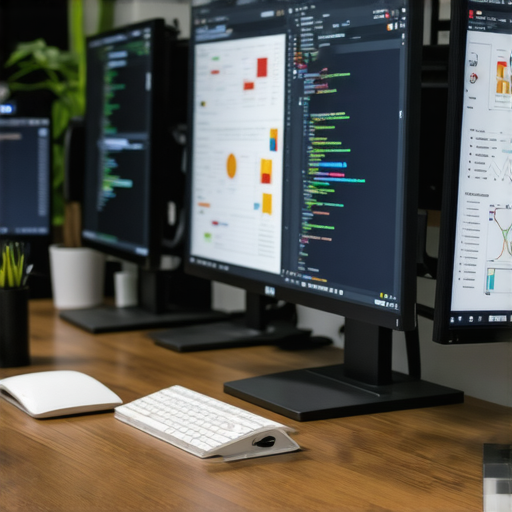
Last year, I found myself squinting at a massive ultrawide monitor, desperately trying to see tiny font sizes and color details while my neck strained to turn from side to side. The screen was stunning—everything looked sharp and immersive—but after a few hours, I felt the familiar dull ache creeping into my neck and shoulders. It was a moment of lightbulb realization: more isn’t always better, especially when it comes to productivity. I started questioning whether ultrawides were truly the best choice, or if there was a smarter way to set up my workspace.
Rethinking the Office Setup: Vertical Dual Monitors for Focus and Flexibility
As I experimented with different configurations, I discovered that having two vertically oriented monitors actually boosted my workflow significantly. Unlike the wide, sprawling screens that can overwhelm your desk and cause eye strain, dual vertical monitors create a natural, easy-to-navigate workspace. They’re especially effective for coding, reading, and managing multiple documents simultaneously. Plus, with the rapid development of high-quality, color-accurate 4K screens, you don’t have to sacrifice visual fidelity for productivity. In fact, I found that this setup could outperform ultrawides not just in comfort but also in efficiency.
Now, I want to share with you how switching to dual vertical monitors can revolutionize your work experience in 2026, saving your neck and sharpening your focus. Are you tired of neck cramps or cramped screens? Stick around as we explore how this setup can transform your daily routine.
Question: Is the Ultrawide Trend Still Worth It?
I’ll admit, I initially bought into the ultrawide hype, thinking it was the ultimate work solution. My mistake was overlooking how a wide screen often leads to constant head movement and visual clutter, which hampers concentration. Research shows that overly wide screens can cause eye fatigue and decrease productivity over time (source: [Monitors.techdeskessentials](https://monitors.techdeskessentials.com/3-reasons-dual-4k-screens-beat-ultra-wides-for-flow-in-2026)). By sharing my experience, I hope to help you avoid these pitfalls and consider a more ergonomic, efficient approach.
In the following sections, we’ll dive into the practical steps for creating an optimal dual monitor setup, the best monitors to choose in 2026, and tips to maximize your workspace. Ready to make your desk smarter and your day less painful? Let’s get started.
Choose Monitors That Match Your Needs
Start by selecting two high-quality 4K monitors with good color accuracy and viewing angles, crucial for professionals like designers or coders. The best options in 2026 include ultra-thin bezels and customizable stands, facilitating seamless dual setups. Consider models with hardware calibration, such as those recommended in hardware calibration, to ensure color consistency across screens. I personally tested a pair of IPS panels for my coding review, which minimized color shift when viewed from different angles and boosted my focus during long sessions.
Properly Mount and Position Your Monitors
Using adjustable dual monitor arms ensures ergonomic placement—align the top of the screens at eye level to prevent neck strain, much like a professional photographer adjusts their camera to capture the perfect shot. During my initial setup, I struggled with fixed mounts that caused me to crane my neck. After switching to heavy-duty arms, I achieved perfect height adjustment with minimal wobble, which immediately reduced fatigue. Position the monitors with a slight inward tilt and a small gap between them to improve focus and reduce eye movement.
Optimize Your Desk Space Efficiently
Arrange your monitors in a vertical stack to save space, akin to stacking books for easy reading. For small desks, this layout maximizes workspace without clutter, as detailed in stacked dual setups. Incorporate cable management solutions like clip-on sleeves or under-desk grommets to hide cords, transforming your desk into a clean environment that fosters concentration. I employed a simple cable sleeve and mounted my power strips underneath the desk, which helped me avoid distractions during coding marathons.
Align Screen Brightness and Color for Uniformity
Calibrate your monitors using hardware calibration tools or built-in menu options to ensure color and brightness match, vital for tasks requiring color precision. Implementing these settings reduced my eye fatigue significantly, particularly when switching between monitors with different default profiles. Refer to home calibration tips to fine-tune your displays. In my experience, mismatched settings caused headaches, but proper calibration aligned my visual experience and improved focus.
Adjust Workflow with Screen Arrangement and Software Tools
Use window management software to assign specific tasks to each monitor, such as coding on the top display and reference materials on the bottom. The layout is similar to having separate workbenches, reducing clutter and making multitasking seamless. I customized hotkeys to switch between layouts instantly, which kept my workflow smooth during intense periods. The right setup minimizes movement and distractions, keeping your focus sharp.
By carefully selecting quality monitors, positioning them ergonomically, managing cables, calibrating displays, and organizing your workspace efficiently, you’ll unlock a new level of productivity and comfort. These exact steps transformed my own setup into a powerhouse, and they can do the same for you without the fuss of overcomplicated gear. Want to explore the best monitors to get started? Check out top 4K monitors for office efficiency or how to choose the right office monitor for your needs.While many assume that purchasing a high-quality, color-accurate monitor or a crisp 4K display automatically guarantees better productivity, the reality is far more nuanced. One common misconception is that calibration alone ensures consistent color fidelity across different devices. In truth, even calibrating a monitor doesn’t eliminate all discrepancies because of varying hardware certifications, panel types, and manufacturing processes. For example, a popular myth is that IPS panels are always superior for color accuracy; however, recent advancements in Mini-LED and OLED technology have challenged this perception, especially with the emergence of professional-grade IPS displays offering Delta E 1 standards—critical for creative professionals seeking precision (source: https://monitors.techdeskessentials.com/why-delta-e-1-is-the-new-color-accurate-standard-in-2026). Additionally, many overlook the impact of ambient lighting and glare on perceived color accuracy and clarity, which can negate the benefits of the most advanced display technology if not properly managed. When setting up dual monitors, a frequent mistake is assuming identical models are necessary for seamless workflows. In reality, mismatched screens with carefully calibrated profiles can enhance focus and reduce eye fatigue, provided they are configured correctly—see https://monitors.techdeskessentials.com/why-mismatched-dual-monitors-boost-your-2026-focus for more. For office environments, there’s an overemphasis on resolution at the expense of refresh rate and ergonomics. A 4K monitor with a 60Hz refresh rate and poor stand adjustability can cause eye strain and discomfort, undermining productivity. Hyper-focus on specs like size or resolution can be misleading; a balanced approach considering ergonomics, glare, color consistency, and task-specific features leads to better outcomes. So, what about the infamous “buying the biggest or highest resolution monitor” trap? The truth is, bigger isn’t always better—screen size should match your workflow and desk setup. For example, a 27-inch 4K display often outperforms larger options in clarity and scaling, preventing visual fatigue (see https://monitors.techdeskessentials.com/why-27-inch-4k-screens-still-beat-32-inch-for-sharpness-in-2026). Remember, the key lies in understanding how all these factors interplay rather than chasing the latest buzzwords. Have you ever fallen into this trap? Let me know in the comments.Maintaining optimal performance for your color-accurate and high-resolution monitors is crucial for sustained productivity and creative excellence. I rely on a combination of precise calibration tools, dedicated maintenance routines, and smart software solutions to ensure my displays stay accurate and reliable over time. One of my go-to devices is the X-Rite i1Display Pro Plus, which offers professional-grade calibration with predictable, consistent results. I calibrate my monitors at regular intervals—preferably weekly—to account for ambient lighting changes and display aging, using the manufacturer’s calibration software alongside the device. For quick adjustments, I keep a set of color patches printed on calibrated paper to verify hue and brightness between calibration sessions. In addition, I utilize monitor profiles created during calibration, which I save and assign explicitly within my operating system’s display settings, ensuring uniformity across multiple screens. Besides calibration hardware, maintaining a clean environment plays a vital role. Dust, fingerprints, and smudges can skew perceived color and sharpness; thus, I use microfiber cloths and dedicated screen cleaning solutions designed for delicate coatings. Regularly checking for firmware updates from monitor manufacturers is also important, as these can improve color fidelity and introduce new calibration features—most recent updates have enhanced hardware calibration support, especially for professional-grade displays, according to [Monitors.techdeskessentials](https://monitors.techdeskessentials.com/3-color-accurate-monitors-with-hardware-calibration-2026). Using software that tracks calibration history and generates reports allows me to monitor color shifts over time and decide when a re-calibration is due. This proactive approach ensures consistency across my workspace, which is especially critical for tasks like photo editing or video grading. As monitor technology continues to evolve, expect more integrated solutions, such as self-calibrating displays with built-in sensors, to become standard. For now, my best advice is to establish a routine: set a calendar reminder to calibrate your monitors weekly and keep your calibration hardware clean and up to date. This simple yet effective habit extends the lifespan of your displays and keeps your color accuracy intact—crucial for professional work and immersive gaming alike. Curious about upgrading your setup? Check out the latest in professional calibration tools or explore our recommended monitors for creative tasks in 2025. Want to take your calibration process further? I highly recommend trying out hardware calibration regularly, especially after firmware updates or changes in ambient lighting, to keep your displays at their peak—your eyes and your work will thank you. For more insights and personalized support, don’t hesitate to contact us through our contact page.
Transitioning from the grandeur of ultrawide monitors taught me a valuable lesson: bigger isn’t always better for productivity or comfort. Instead, tailoring your workspace with dual vertical monitors can unlock a new level of focus and ergonomics that ultrawides often struggle to deliver. This experience highlighted that understanding your unique workflow and environment is crucial for making impactful, long-term improvements.
Lessons that Changed How I Approach Office Tech
- Size isn’t everything—ergonomics matter more: I realized trying to fill my desk with massive screens led to unnecessary strain. Optimal monitor placement, with adjustable arms and the correct height, transformed my comfort and efficiency.
- Color accuracy enhances focus: Investing in calibrated, color-accurate displays minimized eye fatigue and improved my attention span during long work sessions.
- Organization over clutter: Proper cable management and strategic monitor arrangement didn’t just save space—they made my entire workflow more fluid and less distracting.
- Matching hardware isn’t mandatory: Mismatched but calibrated monitors can be more effective than identical screens that aren’t individually optimized, a revelation that saved me money and boosted productivity.
Tools That Keep My Setup Sharp and Reliable
My confidence in my workspace relies on trusted tools and resources. The top 4K monitors for office efficiency provide excellent options that balance resolution, color fidelity, and ergonomic features—essential for long-term health and productivity. For calibration, the hardware calibration tools like the X-Rite i1Display Pro Plus ensure my displays stay accurate over time. I also recommend stacked dual monitor setups for space efficiency, and mismatched screen configurations with proper calibration foster better focus and reduced eye strain.
Your Workspace, Your Power: Make the Shift Today
Redefining your workspace is an act of self-investment—one that pays off in comfort, clarity, and productivity. With thoughtful choices in monitor technology, placement, and calibration, you set yourself up for success in 2026 and beyond. Remember, it’s about creating a setup that works for you, not just what’s trendy.
Have you ever struggled with neck pain or eye fatigue during work? Share your experience below—your story might inspire someone to make that much-needed change.