
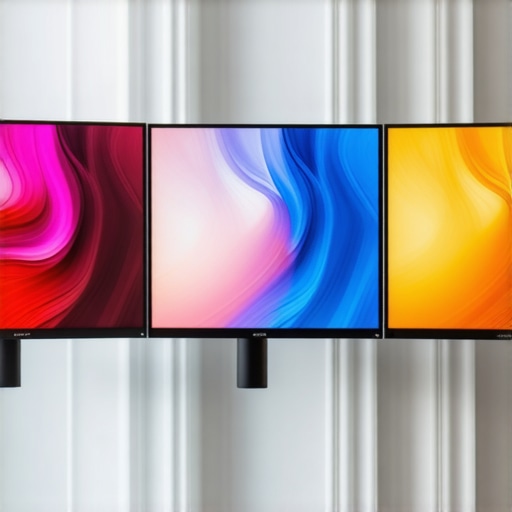
It hit me one dull Tuesday afternoon. I was crouched over my desk, staring blankly at a 4K display that seemed to promise precision but delivered muddy shadows and color inconsistencies. No matter how hard I tried to calibrate, the colors still looked off, and my productivity plummeted. That moment was a lightbulb flickering — I realized that if I wanted to truly excel in professional design in 2026, I couldn’t settle for generic monitors anymore. I needed tools that could match my skills and expectations.
Why Your Workspace Needs a Color-Accurate Monitor Now
Today, more than ever, the quality of our displays impacts our work quality and efficiency. Among the major factors, color accuracy plays a crucial role, especially for creative professionals who need their visuals to be precise. The right monitor can eliminate the back-and-forth of guesswork, reduce eye strain, and streamline your workflow. But here’s the catch — choosing the right display isn’t as simple as picking the latest model off the shelf.
I’ve learned this firsthand. Early on, I made the mistake of trusting reviews that focused solely on resolution and size, overlooking the importance of color fidelity. That oversight cost me hours of redoing projects, and in some cases, losing clients’ trust. According to a study published by the International Color Consortium, accurate color reproduction is essential for preventing miscommunication and ensuring that designs look the same across devices and print. Think about that — in a professional setting, a slight color mismatch can mean the difference between winning a client or losing a deal.
If you’ve faced similar frustrations, you’re not alone. And the good news? There are now monitors designed explicitly for pro design that are ready for 2026. These displays offer not just high resolution, but also critical features like wide color gamuts, factory calibration, and advanced color management tools. I’ll guide you through what to look for and how to invest wisely in your workspace, so you can skip the trial-and-error phase and get straight to producing your best work.
Ready to understand why these monitors are game-changers? Let’s dive into the details that will help you build a professional setup capable of handling the demands of creative industry standards in 2026.
Pick the Right Panel and Size
Begin by selecting a panel type that matches your work needs. IPS panels offer better color accuracy and viewing angles, ideal for creative tasks, while TN panels may be suitable for fast-paced work where response time matters. For size, a 32-inch 4K monitor strikes a balance between workspace and detail visibility, reducing eye strain and enabling more multitasking. When I upgraded to a 32-inch IPS 4K monitor, I immediately noticed sharper visuals and less fatigue during long editing sessions. Visit this guide for in-depth options.
Many assume that simply upgrading to a 4K monitor guarantees a leap in productivity, but this misconception can lead to costly mistakes. The truth is, advanced users recognize that resolution alone doesn’t enhance workflow; factors like color accuracy, screen calibration, and hardware compatibility play pivotal roles. For example, a common myth is that bigger screens always mean better efficiency; however, a poorly calibrated 32-inch display with dull colors can hinder visual clarity, causing eye strain and reducing focus over time. Equally important is understanding that dual monitors with mismatched color profiles can create inconsistency, forcing you to spend extra time adjusting each screen for uniformity.
How do color inaccuracies undermine your professional work in subtle ways?
Research from the International Color Consortium highlights that even slight deviations in color fidelity can distort visual communication, especially in creative fields or tasks demanding precise color matching. Overlooking calibration tools or trusting factory settings often results in subtle discrepancies that accumulate, leading to inaccuracies in print proofs or digital presentations. This is where investing in a color-accurate monitor, one that is factory calibrated and supports wide gamut displays, becomes essential.
Another nuance many miss is the importance of hardware compatibility. Connecting a high-resolution display to an underpowered GPU can cause scaling issues, blurry text, and delayed response times, which frustrate even the most experienced professionals. Before making a purchase, verify that your system can handle the desired resolution seamlessly. Useful resources like our guide on dual monitor setups or color-accurate monitors can help you avoid these pitfalls.
Finally, avoid the trap of thinking that the newest hardware is always the best choice. Sometimes, a well-calibrated, mid-range monitor offers superior color consistency and productivity advantages over bleeding-edge models packed with unnecessary features. The key lies in understanding your specific workflow needs and matching them with the right tools, rather than chasing trends. If unsure, consulting reviews and expert recommendations can help you select equipment that genuinely enhances your work.
So, have you ever fallen into this trap? Let me know in the comments, and share your experiences with choosing the right monitor for your professional needs.Once you’ve invested in a top-tier 4K or color-accurate monitor, ensuring it stays reliable over time becomes crucial. Regular calibration is the cornerstone of long-term accuracy. I personally use the X-Rite i1Display Pro, which offers precise factory calibration adjustments and has proven indispensable in maintaining color fidelity during my creative projects. Setting a monthly calibration routine helps prevent drift in color accuracy, especially important if you rely on your monitor for professional design or detailed data analysis.
Another key aspect is keeping firmware and drivers updated. Manufacturers often release updates that fix bugs or improve compatibility, enabling your monitor to perform at its best consistently. I subscribe to manufacturer newsletters and check periodically through their dedicated software tools.
Using calibration tools is just part of the story. Proper workspace lighting also impacts perceived color accuracy. Avoid direct sunlight or harsh fluorescent lighting that can alter how colors appear on your screen. Instead, opt for neutral, diffuse lighting that complements your display’s settings.
Scaling your setup efficiently over time involves choosing the right accessories. A sturdy monitor arm, like the Ergotron LX, allows me to adjust height and tilt effortlessly, reducing neck strain and optimizing ergonomic positioning. Anchoring multiple monitors with such arms keeps my workspace clean and flexible, especially when scaling to dual or even triple monitor configurations. For specific tips on this, check out our guide on dual monitor arms that prevent wobble.
Looking ahead, advances in AI-driven calibration software promise even more effortless maintenance, automatically adjusting displays before color drift affects your work. Companies like Portrait Displays’ CalMAN are already integrating these features, making calibration as simple as a quick app scan. Prediction: by 2028, routine calibration might become obsolete with seamless, real-time adjustments baked into monitor firmware.
How do I keep my monitors precise over years of heavy use? I make calibration a monthly habit, update firmware regularly, and optimize my workspace lighting. Incorporate these practices into your routine to extend your monitor’s reliability and accuracy. For detailed guidance on maintaining color fidelity, explore our dedicated resource on color calibration tips. Ready to take your calibration routine up a notch? Start with the affordable and highly effective X-Rite i1Display Pro and enjoy consistent, professional results every time.
The Secret Lessons That Changed My Work with 4K Monitors
One of the most profound lessons I learned is that a monitor’s color accuracy is a silent partner in the creative process—often underestimated until it’s missing. Realizing that factory calibration can drift over time prompted me to adopt routine checks, saving countless hours and maintaining my professional integrity. I also discovered that investing in quality calibration tools, like the X-Rite i1Display Pro, isn’t an expense but a safeguard for your work’s credibility. Lastly, I learned that workspace lighting can make or break your monitor’s performance—strive for neutral, indirect illumination to ensure your colors stay true. These insights transformed my workflow from guesswork to precision, empowering me to deliver work that truly reflects my vision.
My Arsenal of Trusted Resources for Visual Excellence
To navigate the ever-evolving landscape of high-precision displays, I rely on a curated set of resources. The article on color calibration tools under $600 has been instrumental in understanding how to maintain color fidelity without breaking the bank. My go-to guide, Ultimate Guide to Dual Productivity Monitors, offers insights into ergonomic setups and multi-screen workflows that enhance productivity. For deep dives into hardware choices, I consult reviews on professional-grade color-accurate monitors. These trusted sources keep my toolkit sharp and my standards high.
Embrace Your Power to Transform Your Workspace Today
The potential of the right 4K monitor extends beyond aesthetics—it’s a catalyst for clarity, efficiency, and creative freedom. The moment to elevate your workspace is now. By choosing a display that aligns with your professional demands and committing to regular calibration, you’re investing in your craft and confidence. Don’t settle for less when your work deserves technology that proves your expertise. Dive into the options, leverage my recommended resources, and start shaping a workspace that truly supports your ambitions. Remember, every small upgrade compounds into a big leap forward—embrace it and watch your productivity soar.