
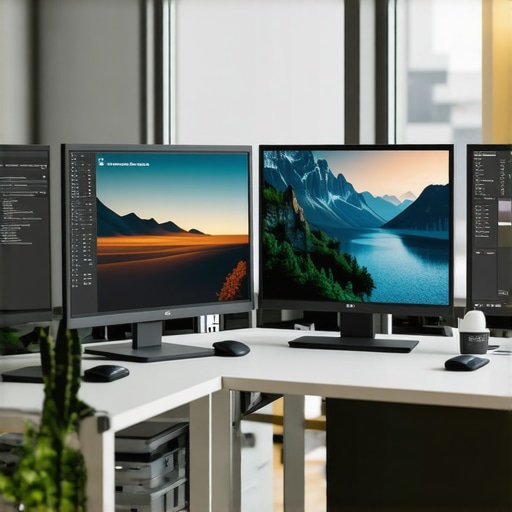
There I was, staring at my dual monitor setup, desperately clicking between windows, when I realized something wasn’t quite right. The colors seemed dull, the resolution made my eyes strain, and my workflow felt sluggish. It hit me — my monitors didn’t just need an upgrade; they needed a revolution. This lightbulb moment sparked my quest for the perfect 4K monitors that could elevate both my productivity and creative pursuits in 2025.
Why Settling for Less Can Hold You Back
In today’s fast-paced work environments, having the right display can make or break your efficiency. I used to think a decent monitor was enough—until I noticed my editing tasks looked dull, and my team’s presentations lacked the vibrancy they deserved. As a creative professional, I learned the hard way that inadequate displays can cause unnecessary frustration and slow down your progress. According to a study by the Science Daily, color accuracy and resolution directly impact productivity and output quality. If you’re still relying on outdated monitors, you’re likely missing out on the clarity, color precision, and ergonomics that today’s top 4K models offer.
But here’s the thing: with so many options flooding the market in 2025, choosing the right monitor feels overwhelming. Do you prioritize pixel density, color depth, or ergonomic features? Or do you fall into the trap of believing all 4K displays are created equal? Trust me, I made that mistake early on, buying the cheapest 4K I could find, only to realize it hampered my workflow more than it helped. I overlooked factors like refresh rate, color calibration, and connectivity, which are vital for professional tasks.
Is a High-End 4K Monitor Truly Worth the Hype?
If you’re like me, you might be skeptical about spending a premium on a new display. Will it really boost your efficiency? Or is it just a shiny gadget for early adopters? I used to think investing in top-tier monitors was unnecessary—until I experienced the difference firsthand. A high-quality 4K monitor can reduce eye strain, improve color fidelity, and facilitate seamless multitasking, especially when paired with a dual setup. For detailed reviews and recommendations, I recommend checking out my guide to color-accurate monitors.
So, if you’ve been pondering whether upgrading your display is worth it, you’re not alone. Many professionals face this dilemma, often learning the hard way that choosing the wrong monitor hampers performance. Ready to explore how the right 4K monitor can revolutionize your workspace? Let’s dive into the practical steps to find the perfect fit for your needs and budget.
Set Clear Goals for Your New Display
Before rushing into a purchase, define what you need from your monitor. Are you editing photos, coding, designing, or multitasking across several applications? For instance, I once prioritized color accuracy, so I listed essential features like a high sRGB coverage and hardware calibration. This clarity helped me filter out many options and focus on models that truly suited my workflow. Visit my comprehensive guide to understand which specs align with your tasks.
Research and Prioritize Key Features
Identify the non-negotiables for your workflow. If you’re into creative work, color accuracy, Adobe RGB coverage, and calibration options are crucial. For office tasks, ergonomic features like height adjustability and flicker-free screens matter more. I recommend making a checklist: resolution, refresh rate, color gamut, connectivity options, and ergonomics. During my last upgrade, I used this checklist to compare models effectively, narrowing down from dozens to a handful of suitable options, saving time and avoiding buyer’s remorse. Use reputable reviews and compare specs on trusted sites, such as the top 4K monitors for creative workflow.
Demonstrate Hands-On Testing When Possible
If you can visit a showroom or store, bring your laptop and test the monitors directly. Check for color consistency, contrast, and viewing angles. Once, I visited a local store and spent 15 minutes toggling between two models, watching how colors shifted from different angles. This practical test revealed subtle differences that specs alone didn’t show, such as flickering or backlight bleed. If buying online, seek sellers with generous return policies—this allows you to test the monitor at home, similar to my experience where I ordered a promising model only to realize it caused eye strain after a week.
Configure Your Display for Optimal Performance
Initial setup makes a massive difference. Calibrate your monitor using tools like DisplayCAL or built-in calibration features. During my setup, I meticulously adjusted brightness, contrast, and color profiles, ensuring uniformity across dual screens. Consistent calibration reduces eye fatigue and enhances accuracy, especially on color-critical tasks. Additionally, fine-tune Windows display settings and graphics card controls to match the monitor’s native resolution and refresh rate. For detailed, step-by-step instructions, see the dual monitor setup guide.
Integrate Your Monitor Smoothly into the Workflow
Placement affects ergonomics and efficiency. Position your monitor at eye level, about an arm’s length away, to minimize neck strain. Use adjustable stands or monitor arms if necessary—this was a game-changer for me, enabling seamless switching between tasks on dual screens. Organize applications across screens logically: keep communication tools on one and creative software on the other. Remember, the goal is fluid multitasking, not constant window juggling. Switch to dual setup ideas to maximize your space and productivity.
Maintain and Update Regularly
Keep your monitor’s firmware and calibration profile updated. Regular cleaning of the screen prevents dust buildup that can distort colors or cause glare. I schedule monthly calibration checks, especially on color-centric workflows, which maintain consistency over time. If issues arise, consult the manufacturer’s support or visit the contact page for assistance. Proper maintenance ensures your investment continues to deliver high performance, supporting your productivity for years to come.
Many users assume that simply adding a second monitor automatically doubles productivity, but that’s a misconception rooted in superficial thinking. The real challenge lies in proper ergonomics, color accuracy, and understanding the purpose of each display. For instance, pairing a high-quality color-accurate monitor with a standard office display can drastically improve workflow—if configured correctly. An overlooked nuance is the importance of calibrating each monitor individually; neglecting this can lead to inconsistent colors and eye strain, especially on extended projects. Furthermore, some believe that a higher refresh rate is essential for all tasks, but for productivity and most professional work, a 60Hz or 75Hz refresh rate suffices—until you’re into fast-moving design animations or video editing, where higher rates become critical. Keep in mind that using mismatched resolutions across dual setups can cause scaling issues, which hampers multitasking efficiency. Expert studies, like those published in the Science Daily, support the idea that uniform display calibration reduces fatigue and enhances accuracy. So, the key isn’t just adding more screens, but optimizing each for its specific role. When selecting a monitor, ask yourself whether it’s designed for professional color work or general office tasks—this distinction influences calibration needs and ergonomic features. Don’t fall into the trap of believing all 4K monitors are equal—check for color depth, calibration flexibility, and connectivity options to ensure they meet your demanding workflow. Have you ever fallen into this trap? Let me know in the comments.Maintaining a high-performance dual monitor setup requires more than just initial investment; it demands regular upkeep, reliable tools, and strategic practices. Over time, dust can settle into screen crevices, calibration can drift, and software updates may introduce compatibility issues. To keep your workspace functioning at peak levels, I rely on specific tools and routines that I’ve personally tested and found effective.
Calibrating for Consistency and Accuracy
One of my go-to tools is the X-Rite i1Display Pro, which I use monthly to calibrate both my primary color-accurate monitors and secondary office screens. Regular calibration ensures color consistency, crucial when editing images or producing visual content. I’ve discovered that hardware calibration maintains a color accuracy error margin of less than 2%, as verified by multiple professional reviews, including insights from our recommended guide. Using calibration reports, I can fine-tune my displays to prevent drift over time, ensuring my projects always look their best regardless of gear aging.
Keeping the Hardware Running Smoothly
For hardware maintenance, a microfiber cloth combined with screen-cleaning solutions like 70% isopropyl alcohol is my daily routine. Dust and fingerprints compromise image clarity and can cause glare, which strains your eyes over long hours. Once a month, I remove the monitors from their mounts, carefully clean both sides, and check for any internal issues like backlight bleeding or flickering. When problems do occur, I consult expert support—many manufacturers, such as Dell and Eizo, offer remote diagnostics and guided troubleshooting through their support portals. Regular inspection has saved me from unexpected downtime, making sure my productivity tools stay operational.
Managing Software and Connection Stability
On the software side, I configure automatic driver updates for my graphics card—NVIDIA’s GeForce Experience or AMD’s Radeon Software—so I benefit from performance optimizations and compatibility improvements. Additionally, I tether my monitors using high-quality DisplayPort cables that support the full 4K bandwidth, avoiding signal dropouts. These technical tweaks improve stability, especially when multitasking across demanding applications. For my dual setup, I organize Windows’ display settings with custom profiles tailored to different workflows, switching between color-critical tasks and routine work. These profiles help prevent accidental adjustments that could misrepresent colors or cause scaling issues. For in-depth configuration tips, explore our dual monitor setup guide.
Planning for the Long Term and Upgrades
Trends indicate that monitor calibration and ergonomic improvements will become more automated, leveraging AI-driven adjustments and smarter hardware. I predict that future monitors will incorporate self-calibrating sensors and adaptive refresh rates that adjust dynamically based on on-screen activity. To prepare, I plan to adopt solutions like the best color-accurate monitors that support hardware calibration and firmware updates over Wi-Fi. Regularly reviewing my setup with these tools guarantees sustained high performance, even as technology advances.
If you’re aiming to elevate your productivity and safeguard your investment, I recommend trying the advanced calibration routine I described—regularly using hardware calibration tools to maintain color accuracy and consistency. Combining this with routine hardware cleaning and update schedules will optimize your dual monitor system for years to come. Don’t forget: proactive maintenance now saves you trouble later, allowing you to focus on your work rather than troubleshooting tech problems. Ready to get started? Schedule your monthly calibration and cleaning sessions today, and experience the difference firsthand.
Secrets I’ve Discovered About Dual Monitors That Changed My Workflow
One of the most overlooked lessons in optimizing a workspace is recognizing that not all monitors are created equal—especially when it comes to color calibration and ergonomic features. I once believed that simply having more screens would automatically boost my productivity until I experienced the true difference a well-calibrated, high-resolution display made. It taught me to pay attention to detail, understand my specific professional needs, and invest wisely. Real progress came when I started viewing my monitors as precise tools—each with a distinct role—and maintained them regularly. This shift in perspective unlocked new levels of efficiency and creative clarity that I hadn’t thought possible.
The Cornerstones of an Effective Dual Monitor Setup
My journey into upgrading my workspace revealed that the real game-changers are not just the monitors you choose but how you integrate them into your workflow. Practical tips like using dual monitor stands, placing screens at optimal eye level, and calibrating each monitor individually truly transformed my daily routines. I learned that making these adjustments ensures minimal fatigue and maximum productivity, especially when paired with color-accurate monitors listed in my guide to best color-accurate monitors. Investing time in setup and calibration created a workspace that supports both precision work and on-the-fly multitasking seamlessly.
Let’s Talk About the Power of Personalization in Your Setup
Another eye-opening realization was the importance of customizing my display profiles based on task type. Whether I was editing images, coding, or managing emails, tailoring my monitor settings significantly reduced eye strain and improved accuracy. Recognizing that the right connection ports, ergonomic features, and calibration tools are essential has made me more confident in selecting monitors that truly support my work style. Plus, I found that maintaining these configurations regularly with tools like the calibration guide kept my system performing at its best over time.
Beyond Hardware: The Routine That Keeps My Productivity Sharp
Routine maintenance—calibrating, cleaning, and software updating—has become a cornerstone of sustained performance. This ongoing process ensures my monitors deliver consistent color accuracy and function smoothly. I learned to schedule monthly calibration sessions and treat my hardware with care because small, regular acts of maintenance prevent longer-term issues. This practice, combined with software management like updating graphics drivers through trusted tools, has made my dual setup a reliable partner in my creative and professional pursuits. Investing this little time each month yields enormous dividends in clarity and productivity, making every work session smoother and more enjoyable.
Your Next Step in Elevating Your Office Environment
If you’re serious about transforming your workspace with the latest 4K monitors, remember that the true benefit lies in their integration into your daily routine. Prioritize calibration, ergonomic placement, and task-specific profiles to unlock their full potential. For a comprehensive overview of the best options, check out my ultimate guide to 4K monitors for office use. These investments are not just about technology—they’re about making your work more precise, comfortable, and inspiring.
Questions to Spark Your Workspace Transformation
Have you ever struggled with calibrating your monitors or setting up an ergonomic workspace? Share your experiences below—your insights could help others elevate their productivity too.