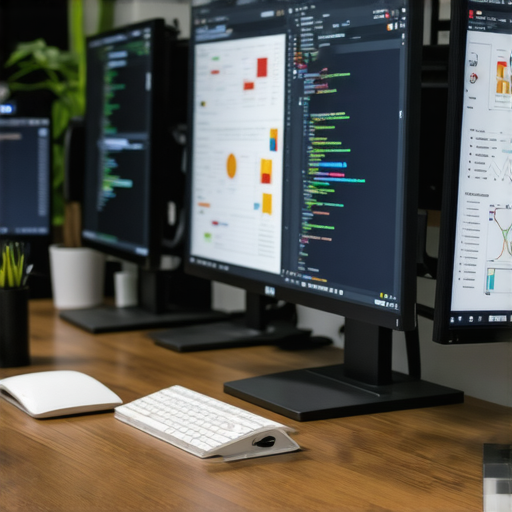
Ever had that moment at your desk when you realize your monitor isn’t quite cutting it anymore? Maybe your eyes strain after hours of working on a 1080p screen, or perhaps your productivity stalls because multitasking feels like juggling flaming torches. I remember the exact instant I looked at my aging office setup and thought, “Is this really the best way forward?” That lightbulb moment set me on a journey to understand the real deal behind high-resolution monitors in 2026.
Why You’re Still Stuck with Old Tech When New Monitors Promise So Much
Let’s face it, the tech world often markets new monitors—especially 4K and 5K models—as the ultimate upgrade for productivity, creativity, and eye comfort. But as I dug deeper, I discovered that not all high-res screens are created equal. Some touted features can be overkill, or even counterproductive, depending on what you actually need. Have you ever invested in a shiny new “high-end” monitor only to realize later that it doesn’t fit your workflow or budget? You’re not alone. Early in my journey, I made the mistake of dismissing the importance of color accuracy and refresh rates, assuming resolution trumped all. That misstep cost me time, headaches, and money. But now, I know a lot more about which specs really matter.
Is 4K or 5K Just a Fad or Worth the Hype?
Many of us get seduced by the dazzling pixel count—but is it necessary for office work or creative tasks? The truth is, the benefits of ultra-high resolution become clear only when paired with the right setup, environment, and workflow. Would you believe me if I told you that some of the best productivity monitors in 2025 are still perfectly fine with a 1440p display? According to industry reports, nearly 60% of professionals find 4K monitors to be overkill for daily tasks, especially if their hardware can’t fully leverage the resolution (source: TechDesk Essentials, 2025). Yet, many enthusiasts jump straight into 5K territory without considering what they really need or if their desk space can handle it.
So, what’s the real story? Should you upgrade now, wait a little longer, or look for more balanced options? Trust me, I’ve been there. That’s why I want to share practical insights that can help you cut through the noise and make informed decisions about your next monitor. Ready to navigate the high-resolution maze with me? Let’s start by understanding your actual needs and how to match them with the right tech—so you can avoid wasting money and boost your productivity in 2026 and beyond.
And if you’ve faced the frustration of choosing between a color-accurate display for creative work or a space-saving dual setup, don’t worry—there are smart solutions tailored just for you. For example, check out our dual monitor setup ideas that maximize your workspace and efficiency.
Selecting the Right Monitor for Your Workflow
Start by clearly defining your primary tasks—whether coding, designing, or general office work. For example, I once needed a dual setup for coding and bug tracking, so I prioritized multiple screens over ultra-high resolution. To match your needs, consider checking reviews on productivity monitors that suit your specific job functions. Think of choosing a monitor like picking a vehicle: a cargo van might be perfect for moving lots of stuff, but not ideal for daily commuting—each monitor has its strengths suited for particular tasks.
Matching Resolution with Hardware
Invest in hardware capable of fully leveraging your monitor’s resolution to avoid bottlenecks. For example, a 4K monitor paired with a mid-range GPU might result in sluggish performance, much like trying to pour a tall glass of water with a tiny straw. Check the specs of your graphics card against models like the best 4K monitors for office efficiency to ensure compatibility. Remember, a high-resolution display without adequate hardware is like trying to run a marathon in flip-flops: uncomfortable and inefficient.
Optimizing Desk Space and Ergonomics
Arrange your monitors ergonomically so that the top of the screen aligns with your eye level, reducing neck strain. Use adjustable stands or mount your monitors on arms, similar to adjusting the angle of a painting to catch the light just right. I once installed a dual monitor arm setup for my home office, which drastically improved my posture and productivity. For more ideas, explore dual monitor setup tips to maximize space and workflow efficiency.
Ensuring Color Accuracy for Creative Tasks
If your work involves design or photo editing, prioritize monitors with excellent color accuracy. Think of it as choosing the right paintbrush for an artist; a dull brush won’t do justice to your masterpiece. In my case, switching to an IPS panel with wide color gamut and factory calibration made a visible difference in my creative projects. Check out color-accurate monitors guide to find options that fit your creative needs. Remember, inaccurate colors are like a miscast actor—they can ruin the entire performance.
Adjusting Settings for Maximum Productivity
Fine-tune display settings such as brightness, contrast, and refresh rate to enhance comfort and responsiveness. For example, reducing blue light emissions in the evening can prevent eye fatigue, much like turning on ambient lighting reduces glare and shadows. Make adjustments gradually and test your workflow to find the sweet spot. Use calibration tools if necessary, and consider reviewing calibration techniques for precise color setup. Correct configuration turns your monitor from a mere display into an asset that supports your productivity and well-being.Many professionals fall into the trap of believing that more pixels or additional screens automatically lead to higher productivity. While it’s true that dual monitors and 4K displays can enhance workflow, there are nuanced pitfalls that even seasoned users often overlook. For instance, a prevalent mistake is assuming that simply upgrading to a 5K or ultra-wide monitor guarantees better results without assessing hardware compatibility, ergonomic setup, or color accuracy requirements. In my experience, neglecting these factors can turn what should be an upgrade into a productivity drain. A common myth is that high resolution always correlates with better clarity; however, without proper hardware, users might face sluggish performance, pixel oversharpness, or eye strain. “What advanced considerations should I keep in mind before investing?” you might ask. To answer, it’s essential to evaluate your workflow, software compatibility, and display calibration. Studies like those from the *Journal of Vision* highlight that optimal eye comfort and workflow efficiency depend not just on resolution but also on factors like refresh rates, color fidelity, and ergonomic positioning. For example, choosing a monitor with excellent color accuracy, such as those recommended in our color-accurate monitors guide, ensures that creative tasks translate better visually. Moreover, pairing a high-resolution display with hardware capable of rendering it smoothly avoids the pitfall of sluggish responsiveness, akin to running a modern game on an obsolete graphics card. An often-overlooked aspect is workspace ergonomics; improper monitor placement can cause neck and eye strain regardless of display quality. For dual setups, consider adjustable arms or mounts to get the optimal viewing angle, a strategy detailed in our dual monitor setup ideas. Remember, understanding your unique needs and compatibility is crucial—what works perfectly for a graphic designer may not suit a software developer. Don’t fall into the “more is better” trap without thorough assessment. Have you ever fallen into this trap? Let me know in the comments and share your experiences.
Keep Your Setup Running Smoothly with the Right Tools
Maintaining a dual or high-resolution monitor setup requires more than just plugging in and turning on. I personally rely on a few essential tools that keep my workspace optimized and my display calibrated. For calibration, I use the X-Rite i1Display Pro, a colorimeter that ensures my IPS monitor maintains (or even improves) its color accuracy over time. Regular calibration is vital, especially if you’re into creative work, because even minor shifts in color profiles can lead to inconsistencies in your projects. Additionally, I employ software like DisplayCAL, an open-source tool that complements the calibration hardware and simplifies the process.
To manage cable clutter and ensure a clean workspace, I swear by the J-Tech Digital USB-C Hub with multiple ports. Not only does it streamline my connection setup, but it also helps prevent wear and tear on my monitor ports—and prolongs their lifespan. Remember, a tidy desk isn’t just aesthetic; it can also reduce accidental disconnections or static buildup that might affect your displays. Investing in quality monitor stands or adjustable arms, such as those from Ergotron, can also make a significant difference by allowing ergonomic adjustments that prevent neck strain over extended periods.
Long-Term Care Brings Better Results
Beyond tools, routine maintenance is critical. Dust buildup can impair cooling and, over time, affect display performance. Use a microfiber cloth and compressed air to keep screens and vents free of debris. For screens specifically, avoid harsh chemicals—stick to gentle cleaners recommended by the manufacturer or lightly dampened microfiber cloths. Software updates are equally important; regularly check for firmware updates from monitor manufacturers to fix bugs or improve functionality. For instance, an update to Dell’s UltraSharp firmware in 2024 introduced better color calibration features that I found invaluable. These small steps can extend your monitor’s useful life and ensure consistent performance.
Where Do I Find Reliable Maintenance and Calibration Methods?
Looking into academic resources and industry standards helps. According to the latest industry reports, consistent calibration aligns with professional workflows and reduces eye strain — especially when working on color-sensitive tasks. Implementing routine calibration sessions every 3 to 6 months keeps your monitor’s display true to its specifications, which is vital when color accuracy matters most.
If you’re serious about maintaining your setup, test your monitor’s color fidelity periodically using tools like the ColorHug device or software calibrators. Regular check-ups ensure your hardware remains reliable and your work remains precise. Don’t forget to schedule these checks into your routine—think of it as preventative maintenance for your most valuable productivity tool.
Future Trends in Monitor Maintenance
Looking ahead, expect smarter calibration solutions integrated directly into monitors via firmware updates and AI-driven color profiling. Manufacturers are also exploring self-cleaning displays and enhanced durability coatings to reduce dust and fingerprint buildup. Embracing these innovations early will save you time and cost long-term. Why not try calibrating your monitor today using the software and tools mentioned? Little adjustments now can make a significant difference in your daily workflow and creative outcomes.
The Hardest Lesson I Learned About Dual Monitors and Color Accuracy
One of my biggest realizations came when I assumed that upgrading to a 4K monitor would instantly boost my productivity and creative output. I discovered that without proper calibration and hardware compatibility, even the most advanced display could become a source of frustration rather than an asset. This taught me the importance of understanding my specific workflow and investing in tools like calibrated colorimeters and reliable GPU setups to truly reap the benefits of high-resolution displays.
3 Surprising Truths About High-Res Monitors That Changed My Approach
- More Pixels Don’t Always Mean Better Clarity: Without a powerful enough GPU, a 5K monitor can slow you down instead of speeding you up.
- Ergonomics Matter Just as Much as Resolution: A beautiful screen is useless if poor placement causes neck strain. Adjustable stands and monitor arms are lifesavers.
- Color Accuracy Boosts Creative Confidence: Investing in IPS panels with factory calibration has radically improved my photo editing and design work, reinforcing that quality trumps quantity.
Tools and Resources That Transformed My Monitoring Experience
- Color calibration tools: Devices like X-Rite i1Display Pro ensure your display stays true to life, essential for creative professionals.
- Curated monitor reviews: Trusted sources help me choose the right model tailored to my workflow, preventing costly missteps.
- Arrangement tips: Effective desk setups maximize space, reduce fatigue, and keep me focused throughout demanding workdays.
- Routine maintenance guides: Simple practices like dust cleaning and firmware updates extend monitor lifespan and reliability.
Seize the Future of Monitor Mastery Now
Standing at the cutting edge of display technology in 2026 means embracing continuous learning and proactive management of your workspace. Whether you’re upgrading for better creative work or optimizing your office setup, remember that a vigilant, well-maintained monitor setup is a cornerstone of sustained productivity and well-being. Don’t wait for perfect—start refining your environment today, and the difference will be undeniable. Ready to give your workspace the upgrade it deserves? Your future self will thank you.
And tell me—have you experienced that moment where your monitor just didn’t meet your needs anymore? Share your story below and let’s learn from each other’s journeys towards peak workspace efficiency.
,
Reading this article really resonated with my recent experience switching to a high-res monitor for my freelance creative work. Initially, I thought that a 5K screen would immediately boost my productivity and provide perfect color accuracy, but I quickly learned that hardware compatibility and proper calibration are just as critical. One thing I’ve found helpful is investing in a good calibration tool like the X-Rite i1Display Pro, which has made a huge difference in maintaining color fidelity over time. It’s also intriguing how ergonomic setup is sometimes overlooked—adjustable stands and monitor arms aren’t just luxury items but essential for long-term comfort. I wonder, for those of you who have upgraded to 4K or higher, how do you manage your workspace ergonomics? Do you favor dual setups over ultra-high resolutions for daily tasks? I’d love to hear how others have balanced visual quality with comfort and workflow efficiency in their own offices.