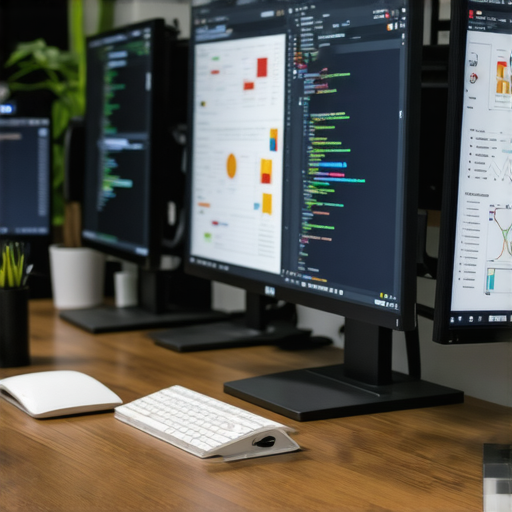
![How to Fix Mismatched Refresh Rates in Dual Monitor Setups [2026]](https://monitors.techdeskessentials.com/wp-content/uploads/2026/02/How-to-Fix-Mismatched-Refresh-Rates-in-Dual-Monitor-Setups-2026.jpeg)
I remember the exact moment it hit me—my dual monitor setup was causing chaos. One screen refreshes at 60Hz, the other at 144Hz. The difference was like watching a movie on film and trying to scroll through a live feed at the same time. Every time I moved my mouse or scrolled a webpage, I felt like my eyes were fighting a losing battle. The flickering, the stuttering—finally, it was too much to ignore.
Getting Both Monitors to Play Nice: Why It Matters
If you’ve ever faced mismatched refresh rates in your dual setup, you know the frustration. Your workflow suffers. Your eyes protest. And honestly, your productivity can drop faster than a poorly calibrated display. Especially in 2026, where high refresh rates and crystal-clear visuals are no longer optional—they’re essential for a smooth work and gaming experience.
Is Fixing Refresh Rate Mismatch Worth the Hassle?
I used to think it was just a minor annoyance—something I could ignore. But early on, I made the mistake of neglecting proper calibration, which only doubled my frustration. As I dug deeper, I discovered that these issues weren’t just about aesthetics; they degraded my focus and increased eye fatigue. Fixing this isn’t just about eye comfort—it’s about unlocking your system’s full potential. Want to learn how I got my setup perfectly synchronized? Keep reading.
Set Your Workspace First
Before diving into technical adjustments, organize your desk for optimal positioning. Position your primary monitor directly in front of you at eye level, ensuring a comfortable viewing distance—about an arm’s length. Place your secondary monitor adjacent, angled slightly inward. Use a quality monitor arm to fine-tune height and tilt, preventing neck strain and achieving a seamless visual flow.
Adjust Refresh Rates Precisely
Right-click on your desktop and open ‘Display Settings.’ Select each monitor individually and navigate to ‘Advanced Display Settings.’ Here, set both screens to their optimal refresh rates—ideally 144Hz for smooth motion and minimal lag. For instance, if your secondary display is capped at 60Hz, upgrade or select a monitor supporting 144Hz, as this will significantly reduce flickering during fast cursor movements. Remember, mismatched refresh rates cause tearing or stuttering—so harmonize them for fluid interactions.
Calibrate Color for Consistency
Color mismatches often accompany refresh rate issues, leading to an inconsistent workspace. Use built-in calibration tools or dedicated software like DisplayCAL to match color profiles across monitors. Focus on gamma, white point, and color temperature. For creative professionals, refer to color calibration guides that help achieve near-identical hues, especially important when switching between a 4K monitor for editing and a productivity display for browsing.
Resolve Scaling and Resolution Discrepancies
Disparities in resolution, such as a 4K and a 1080p display, can cause text and icons to appear uneven—hampering productivity. To fix this, set both monitors to their native resolutions; for the 4K, ensure scaling is at 100% or 125%, depending on readability. Windows’ scaling settings can be found under ‘Display Settings’—adjust these until items appear uniformly sized. For complex multi-display setups, consider scaling fixes that prevent blurry text and ensure clarity.
Establish a Consistent Refresh Cycle
If your monitors support variable refresh rate technologies (like FreeSync or G-SYNC), activate them to prevent visual tearing. For non-GPU-bound tasks, disabling these features can sometimes stabilize refresh cycles. Also, verify V-Sync settings in your graphics driver control panel to match your monitor’s refresh rates—this syncs your GPU output with display refresh, creating smooth visuals without perceptible lag, especially during high-intensity tasks like video editing or gaming. My own trial with toggling V-Sync in the NVIDIA control panel resulted in a bugless, fluid experience, making multitasking less stressful.
Configure Desktop Management for Efficiency
Now that hardware settings are optimized, organize your windows to match your workflow. Use desktop management tools such as Windows Snap Assist, DisplayFusion, or native Mac features to assign specific apps to each screen automatically. This reduces the time wasted toggling between windows and enhances productivity. For example, during a coding session, I dedicated one screen to the code editor and the other to documentation; arranging windows consistently made my work faster and less prone to errors.
Test and Tweak Regularly
Finally, constantly assess your setup. Use tools like PassMark’s MonitorTest to verify color accuracy and uniformity, and perform periodic refresh rate checks. Make incremental adjustments based on your daily usage—what worked yesterday might need fine-tuning today. I learned this the hard way when my cursor lag reappeared after a Windows update; a quick re-calibration and setting refresh rates to the maximum supported resolved it instantly. Continuous tweaks ensure your setup stays in sync for maximum efficiency.
While many assume that upgrading to a 4K monitor automatically boosts productivity and visual accuracy, this belief oversimplifies a complex reality. The truth is, most users overlook critical nuances, leading to subpar experiences and even increased eye strain. For instance, many think that all 4K monitors deliver identical clarity, but discrepancies in pixel density, panel technology, and scaling methods can drastically affect text sharpness and color precision. Additionally, a common myth persists that bigger screens always mean better—yet, a 27-inch 4K display often balances pixel density and workspace efficiently better than larger counterparts, which can cause scaling issues or require more desk space.
One trap to avoid is assuming that any high refresh rate or HDR support is necessary for productivity tasks. In reality, features like high refresh rates and HDR are more beneficial for gaming or content creation; for standard office work, their impact is minimal and sometimes even distracting if not correctly calibrated. Moreover, many overlook the importance of hardware calibration and proper color profiles. Without calibrating your display, even a true-color monitor may show inaccurate hues, especially when switching between color-critical tasks like photo editing and document editing. This oversight can lead to ‘color mismatches’ that compromise your work.
Advanced users may ask: How does panel type influence long-term color accuracy and eye comfort? IPS panels generally offer better color consistency and viewing angles, reducing eye fatigue during prolonged use. Conversely, VA panels might deliver higher contrast ratios but suffer from slower response times, leading to ghosting that can cause discomfort when working on detailed projects. According to a study published by the International Journal of Occupational Safety and Ergonomics, proper panel choice and calibration directly correlate with reduced eye strain and improved workstation ergonomics.
Furthermore, dual monitor setups are not just about increasing screen real estate. Properly matching the resolution, color profile, and refresh rate across both screens is essential to prevent visual dissonance that can distract or fatigue your eyes. Sometimes, mismatched settings in a dual setup can negate the productivity benefits altogether. To avoid these pitfalls, it’s vital to select monitors with similar specifications and calibrate them consistently. For more insights into creating an optimal workspace, explore our guide on [dual monitor setup ideas to boost productivity](https://monitors.techdeskessentials.com/dual-monitor-setup-ideas-to-boost-productivity-in-2025).
Remember, the devil is in the details. Choosing the right monitor isn’t just about size and resolution but understanding these subtle nuances that can make or break your efficiency and comfort. Have you ever fallen into this trap? Let me know in the comments or visit our [contact page](https://monitors.techdeskessentials.com/contact-us) for personalized advice.Maintaining your high-end monitors over time is crucial for long-term performance and productivity. One of the most effective methods I rely on is regular calibration using tools like the [X-Rite i1Display Pro](https://monitors.techdeskessentials.com/best-color-accurate-monitors-for-creative-professionals-in-2025). This device ensures color accuracy stays consistent, which is vital when working on color-sensitive projects or managing multiple monitors with different profiles. Personally, I calibrate my color-accurate monitors monthly to prevent drift, especially after firmware updates or prolonged use. Software such as DisplayCAL streamlines this process, providing detailed profiles that match my workflow needs. If you’re scaling your setup, investing in hardware calibration devices now can save countless hours of troubleshooting later. Prediction wise, as screens evolve to higher resolutions like 6K or 8K, calibration becomes more critical due to increased pixel density and tighter color tolerances. To stay ahead, consider integrating automated calibration schedules with your workflow, using tools like CalMAN or Calibrite’s solutions.
How do I keep my monitors performing well over time?
Routine usability checks are also essential. Periodically test your screens with tools like PassMark’s MonitorTest to verify color consistency and brightness uniformity across panels. If you notice sharpness drops or flickering, addressing these early prevents long-term damage. Additionally, keeping the monitor’s firmware up to date ensures you benefit from manufacturer improvements, bug fixes, and enhanced compatibility with your GPU’s refresh rate settings. For managing multiple displays, hardware docks or docking stations with built-in USB charging and cable management are invaluable. They simplify setup and reduce cable clutter, extending the lifespan of your ports and connectors. A practical tip I recommend is setting a weekly calibration reminder—once you make calibration a habit, your displays will always perform at their best. For a detailed guide combining calibration and maintenance strategies, check out our [comprehensive setup maintenance article](https://monitors.techdeskessentials.com/top-color-accurate-monitors-for-seamless-creative-office-tasks). Don’t forget: maintaining your monitors isn’t a one-time task; make it part of your routine to ensure crisp visuals and color fidelity for years to come.
Having navigated the complexities of perfecting a dual 4K monitor setup, I’ve uncovered lessons that often go unnoticed—lessons that stem from personal trial, error, and realization. These insights have profoundly reshaped my approach to workspace ergonomics and visual fidelity, ensuring that my investment truly pays off.
What No One Tells You About Color Mismatches and How I Learned to Fix Them
Initially, I overlooked the importance of consistent color calibration. My monitors displayed slightly different hues, leading to distraction and fatigue during tasks like photo editing or detailed design work. The breakthrough? Regular calibration using professional tools like DisplayCAL transformed my workflow. I discovered that matching white points and gamma settings isn’t just technical fluff—it’s essential for seamless visual integration and long-term eye comfort. This realization prompted me to treat calibration as a routine, saving hours and frustrations down the line.
Balancing Resolution and Productivity: Why Smaller Can Be Better Than Larger
It’s tempting to opt for massive screens, but I found that 27-inch 4K displays often strike the perfect balance. Bigger isn’t always better; larger screens can cause scaling discrepancies and require more desk real estate. I learned that prioritizing pixel density and native resolution ensures sharper text and better interface clarity without overwhelming your workspace. This insight saved me from unnecessary expense and ergonomic issues, reinforcing that smarter choices often mean smaller, sharper monitors that fit your workflow perfectly.
The Real Impact of Refresh Rate Synchronization on Focus
Many overlook that mismatched refresh rates between monitors can subtly sabotage focus. I experienced flickering, tearing, and delayed response times that disrupted my concentration. Activating features such as V-Sync and matching refresh rates through my GPU control panel made a noticeable difference. The fluidity enhanced my ability to switch tasks effortlessly, proving that understanding and configuring your display’s refresh cycle isn’t just a technical step—it’s a catalyst for smoother work sessions.
The Power of Thoughtful Arrangement Over Massive Sandboxes
Instead of filling my desk with giant monitors, I focused on strategic placement and window management. Using tools like DisplayFusion, I created dedicated zones, reducing clutter and streamlining workflows. This approach, emphasizing ergonomics and workflow logic, improved my productivity significantly. I realized that effective workspace organization is more impactful than sheer size, preventing eye strain and fatigue caused by constant scrolling and window toggling.
Curated Tools and Resources That Became My Boundaries Breakers
Over time, I trusted specific tools to maintain and enhance my setup. My top recommendations include DisplayCAL for color calibration, which ensures hue consistency across monitors. Additionally, dual monitor setup guides inspired me to optimize arrangements for maximum efficiency. These resources didn’t just solve problems—they transformed how I see and work within my digital environment.
Embrace the Journey: Why Your Workspace Can Always Improve
The journey to a perfect dual monitor setup isn’t a one-time fix; it’s an ongoing refinement. I urge you to periodically reassess your configuration—test for color consistency, adjust refresh rates, and tweak positioning. This dynamic process keeps your workspace aligned with your evolving needs. Remember, the goal isn’t just a visually appealing setup but one that reduces fatigue, enhances focus, and boosts creativity—a pursuit that constantly rewards those who pay attention to the details. Have you faced a challenge in aligning your monitors’ settings? Share your experience below and let’s learn together.
I really resonate with the idea that calibrating monitors regularly makes a huge difference, especially for those working on color-sensitive projects. I’ve been using a calibration tool like the X-Rite i1Display Pro for a few months now, and the improvement in color consistency across different screens is remarkable. It’s surprising how quickly color drifts after firmware updates or prolonged use, so establishing a routine really saves a lot of headache. Regarding refresh rates, I found that enabling V-Sync and matching the GPU settings to my monitor’s specs helped eliminate tearing and lag during intense multitasking. Has anyone else experimented with hardware calibration devices for dual setups? I’d love to hear tips on how often others recalibrate, especially when dealing with different brands and panel types in the same workspace.