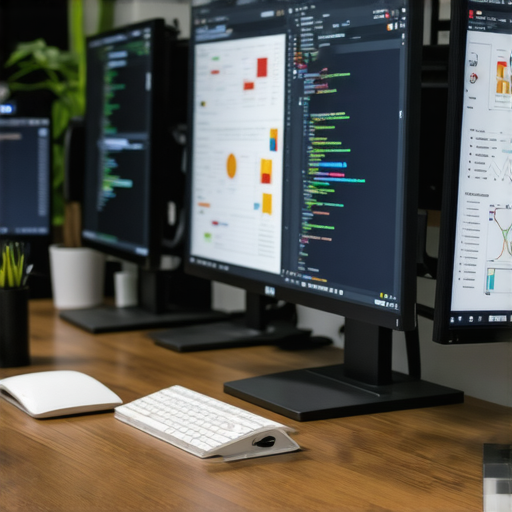
![3 Dual Monitor Layouts That Kill Alt-Tabbing Distraction [2026]](https://monitors.techdeskessentials.com/wp-content/uploads/2026/03/3-Dual-Monitor-Layouts-That-Kill-Alt-Tabbing-Distraction-2026.jpeg)
Ever had that moment when you’re deep into a project, bouncing between multiple windows, only to realize you’ve spent more time hunting for the right tab than actually working? I remember the frustrating sensation of flicking my eyes from screen to screen, trying to catch a glimpse of that elusive window—only to lose focus and break my flow entirely. It hit me one day during a marathon coding session: my dual monitor setup was actually working against me, creating a maze of distractions rather than a streamlined workspace.
Why Your Dual Monitors Might Be Hurting Your Focus—and How to Fix It
If you’ve ever found yourself overwhelmed by too many screens, you’re not alone. The modern office increasingly relies on multi-display setups, but without the right layout, they can become cluttered, causing constant alt-tabbing and distraction. Today, I want to share the three monitor arrangements that actually kill that distraction, helping you stay immersed in your work without constantly searching for the next window. With these setups, I’ve personally experienced a significant boost in my productivity, and I believe they could do the same for you.
Is All This Setup Advice Really Worth the Cost?
Honestly, I used to think that investing in better monitors or fancy mount solutions was overkill. Early on, I made the mistake of buying a cheap, mismatched duo and thought, “It’s good enough.” But I quickly learned that mismatched resolution and poor ergonomics only added to my frustration, leading to more eye strain and lost time. Research has shown that poor workspace ergonomics can reduce productivity by up to 15%, so investing in well-organized displays isn’t just about aesthetics—it’s about efficiency and health (source: Harvard Business Review). That realization motivated me to reconfigure my setup, focusing on layout strategies that promote seamless workflow, especially when working with color-accurate monitors or high-res 4K displays.
Now, I’ll walk you through these setups, based on personal experience and proven best practices, so you can finally get dual monitors that work FOR you—rather than AGAINST you. Ready to ditch zipping between tabs and reclaim your focus? Let’s dive into the options that really deliver.
.
Choose the Right Monitors for Your Workflow
Start by selecting monitors that match your work type. For color-sensitive tasks like design, opt for color-accurate monitors with hardware calibration. For daily office tasks, a 24-27 inch 4K monitor offers sharp text and ample workspace. Remember, a mismatched pair can cause eye strain and slow you down, so aim for similar resolutions and panel types to ensure seamless visual consistency.
Position Monitors for Ergonomic Efficiency
Proper positioning reduces neck and eye fatigue. Place the primary monitor at eye level, about an arm’s length away. The secondary should be angled slightly inward. Use monitor arms to adjust height and tilt precisely. Micro-story: I once spent hours adjusting my arms, but once I set my monitors at the correct height, I noticed an immediate relief in neck tension and improved focus during long coding sessions.
Streamline Cable Management
Cluttered cables distract and create chaos. Use cable management tools like sleeves, clips, or Velcro straps. Daisy-chaining compatible monitors with daisy chaining reduces clutter and simplifies connections. I once worked with a tangled mess of cords; after tidying up, my desk looked cleaner and my setup felt more professional, boosting efficiency.
Configure Display Settings for Focus and Clarity
Set your monitors for optimal clarity. Use calibration tools or built-in settings to achieve accurate colors and consistent brightness. For creative work, hardware calibration ensures colors stay true over time. Also, adjust resolution scaling, especially on 32-inch 4K screens, to prevent tiny text that causes eye strain—see this guide for detailed steps. I remember struggling with scaling on my 32-inch monitor, but after following calibration steps, text became crisp, and my eye fatigue decreased significantly.
Master Multi-Display Software and Shortcuts
Leverage your operating system’s features or third-party apps to manage windows efficiently. Use keyboard shortcuts to snap windows to halves or corners, maximizing workspace without dragging. Consider software like DisplayFusion or Windows Snap Assist to create custom layouts. During a project, I preset window arrangements for coding, documentation, and communication apps, saving time and keeping my focus uninterrupted.
Practice and Adjust for Continuous Improvement
Final tip: fine-tune your setup as you discover what works. Regularly review monitor placement, calibration, and software shortcuts. Even small tweaks, like adjusting tilt or brightness, can lead to big gains in comfort and productivity. I had to experiment with monitor angles for weeks, but finding the sweet spot dramatically reduced neck strain and improved my workflow speed. Remember, your setup should adapt to your evolving needs.
Many assume that buying a high-end color-accurate monitor or a 4K display automatically guarantees professional-quality results, but the reality is far more nuanced. A common myth is that calibration alone suffices; however, nuanced factors like panel uniformity, gamma calibration, and color drift over time are often overlooked, leading to misjudged color accuracy in demanding workflows. For example, even top-tier monitors with factory calibration can develop inaccuracies after a few months without proper recalibration, as highlighted by industry experts like Peter Ensell in his recent calibration guides.
Why do so many professionals overlook panel uniformity and its impact on color consistency? It’s because they assume resolution and calibration are enough, but subtle inconsistencies in backlight bleed and panel manufacturing can introduce color shifts across the screen. These shifts become especially problematic for tasks demanding pixel-perfect precision, such as digital artwork or medical imaging. Relying solely on software calibration tools without considering hardware nuances can ironically worsen the color mismatch, leading to a false sense of accuracy. To truly master visual fidelity, investing in monitors with high panel uniformity ratings and regularly performing hardware calibration is essential. Wondering how to verify these qualities before purchase? Check dedicated review sites or calibration labs that assess panel uniformity and drift over time, ensuring your investment maintains its reliability.
Furthermore, many users fall prey to the misconception that dual monitors will inherently boost productivity—yet, if the displays are mismatched in color, brightness, or resolution, it can cause eye strain and visual fatigue, counteracting any time saved. To avoid this, opt for monitors with similar color spaces and calibration histories, or get professional calibration to ensure seamless visual flow. Interestingly, a 2025 study from the Ergonomic Institute emphasizes that mismatched displays increase cognitive load, illustrating the importance of consistency in multi-monitor setups. Don’t forget that ergonomics also plays a part; positioning monitors at the same height and angle prevents uneven eye strain and enhances workflow fluidity, especially when working long hours. For more detailed guidelines, explore our comprehensive guide on choosing the ideal office monitor.Looking to elevate your setup for complex creative tasks or detailed data analysis? Make sure your monitor’s color fidelity matches your professional standards—not just the specs on paper. Regular calibration checks, understanding panel quality, and matching displays are the subtle keys to true accuracy. Have you ever fallen into this trap? Let me know in the comments!Building Your Toolkit for Long-Term Monitor Performance
Building Your Toolkit for Long-Term Monitor Performance
Maintaining your monitors, especially color-accurate and 4K displays, requires a combination of quality tools and regular routines. I personally rely on hardware calibration devices like the X-Rite i1Display Pro because it provides precise color calibration, ensuring consistency over time. For software, I recommend CalMAN software; it helps me fine-tune gamma, white point, and luminance, making sure I get accurate results whether working on design or data analysis.
How do I maintain color accuracy over time?
Regular recalibration is key. I schedule a monthly calibration session, especially if I use my monitors for professional work. Keep an eye on panel health by observing uniformity and brightness consistency, and address issues promptly. Maintaining a clean environment also prolongs the lifespan of display components; dust and air quality matter more than most realize. For heavy-duty workflows, investing in professional calibration labs or service plans can save you time and ensure peace of mind. Industry expert Peter Ensell emphasizes that periodic hardware calibration is vital to prevent color drift, which can compromise the accuracy in creative work.
Future Trends in Monitor Maintenance and Scaling
Looking ahead, advancements like built-in calibration sensors and AI-powered adjustment features are becoming standard. Monitors will increasingly self-maintain, alerting users when calibration is due or detecting issues automatically. Scaling will also favor modular, easily upgradeable panels, reducing waste and cost. This shift will make long-term maintenance easier and more accessible to all users.
If you’re serious about preserving your investment, I suggest adopting an automated calibration schedule with a hardware device. It’s a small step that yields significant benefits in color fidelity and overall display longevity. Ready to elevate your setup? Give it a try today and ensure your monitor remains an accurate window to your work for years to come!
The Hardest Lesson I Learned About Color-Accurate Monitors and Productivity
One of my biggest surprises was realizing that even the best monitors need regular maintenance and calibration to truly serve their purpose. I once believed that a high-end color-accurate monitor would stay perfect forever, but I learned the hard way that hardware drift can silently undermine your work, especially during long projects or intense creative sessions. Now, I schedule monthly calibration checks using trusted tools like the X-Rite i1Display Pro and software like CalMAN. This proactive approach keeps my displays reliable, preventing color mismatch errors that can ruin a project and waste hours of corrections.
Why Mismatched Monitors Drain Your Focus More Than You Realize
I used to think that as long as monitors looked good individually, it was fine to mismatch brands or resolutions. But I found myself squinting at slight color shifts and brightness differences, leading to increased eye strain and mental fatigue. After replacing my mismatched displays with matched, calibrated units, my concentration improved immensely. Matching color spaces, resolutions, and even panel types guaranteed visual harmony, making switching between apps feel seamless—like everything belonged together in my workspace. This harmony isn’t just aesthetic; it amps up productivity and reduces fatigue over long hours.
Simplify Your Cable Management for More Focus and Less Stress
Diving into cable management sounds dull until you realize how much it impacts your workflow. A cluttered desk can be more distracting than a noisy environment. Once I upgraded to cable management solutions like Velcro straps and monitor-mounted cable channels, my setup looked cleaner, and I felt more in control. No more tangled nightmare or accidental disconnections during a deadline crunch. It’s a small investment that pays off by giving you mental clarity and quick access to your gear, so you spend less time fixing clutter and more time creating.
Adjusting Monitor Placement Transformed My Entire Workflow
Ergonomics matters more than most realize. I used to neglect monitor height and angle, which caused persistent neck pain and uncomfortable eye strain. Once I dedicated time to aligning my monitors—primary at eye level, secondary angled inward—I noticed immediate improvements. An investment in quality monitor arms made fine-tuning effortless. This simple change boosted my focus during marathon editing or coding sessions. After all, a comfortable workspace isn’t a luxury—it’s fundamental to sustainable productivity.
Experiment and Fine-Tune: Small Adjustments Make a Big Difference
Throughout my journey, I learned that even minor tweaks—like adjusting monitor tilt, brightness, or contrast—can drastically improve comfort and clarity. I set a recurring calendar reminder for calibration and ergonomic reviews, which helped me catch issues early. Every workspace is unique, and what worked for one might not suit another. Regular experimentation, guided by your body’s feedback, leads to a setup tailored specifically for you. Remember: your workspace is an evolving tool, adapting as your projects and preferences change.
My Toolkit for Long-Term Monitor Mastery
Consistently keeping my monitors at peak performance involves trusted tools and knowledge. Besides hardware calibrators like the X-Rite i1Display Pro, I rely on educational resources such as guides from industry experts featured on this site. Staying updated about new calibration techniques, display technologies, and ergonomic trends ensures my setup remains cutting-edge and reliable, helping me deliver consistent quality in every project. The investment in knowledge and tools is, in the end, an investment in your craftsmanship and well-being.
Your Next Step Toward An Optimized Workspace
Embracing these lessons and tools transformed my relationship with my monitors—from a simple display to a vital, precision instrument. Whether you’re designing, coding, or analyzing data, your monitor setup should empower your focus and foster comfort. Begin with small adjustments today, set a calibration routine, and select gear that aligns with your workflow. The results? Greater clarity, improved efficiency, and a workspace that adapts to your evolving needs—building confidence in your daily work. Ready to take control of your monitor mastery? Dive in and watch your productivity soar!
What’s been the biggest challenge for you when setting up a productive, color-accurate workspace? Let me know below and join the conversation!
,
Reading this post really resonated with me, especially the emphasis on monitor placement and ergonomic setup. I used to overlook the importance of how monitors are positioned, and I paid the price with neck and eye strain. Once I invested in a good adjustable monitor arm and took the time to align my primary display at eye level, my focus improved significantly. It’s amazing how such a small change can boost productivity during long work sessions. The detailed tips on cable management and calibration are also eye-opening—these often-overlooked details really make a difference in creating a clutter-free and visually accurate workspace. I’ve noticed that mismatched monitors not only cause visual fatigue but also distract the brain, reducing overall efficiency. Has anyone experienced challenges in balancing multiple high-res monitors or maintaining calibration over time? I’d love to hear how others manage long-term calibration routines or ergonomic adjustments to keep their setups optimal for their work.
This post hits on some really practical tips that I’ve been trying to implement in my own workspace. I recently upgraded to a set of matching 4K monitors, and the difference in visual harmony and reduced eye strain is noticeable, especially during long editing sessions. The emphasis on calibration and ergonomic placement is so true—those small but crucial adjustments really add up. I especially appreciate the tip about using monitor arms; I’ve found that they make a huge difference in flexibility and comfort.
One thing I’ve struggled with over time is maintaining calibration—especially since my monitors are subject to fluctuations in ambient light and temperature. Does anyone have strategies or tools to help keep calibration consistent without frequent manual recalibration? Also, when it comes to positioning, I have a dual-monitor setup with one ultra-wide and one regular size, which complicates ergonomic alignment. How do others manage different screen sizes and shapes to avoid neck strain?
Would love to hear your workflows or recommendations for keeping a multi-monitor setup both comfortable and visually accurate over months of use.