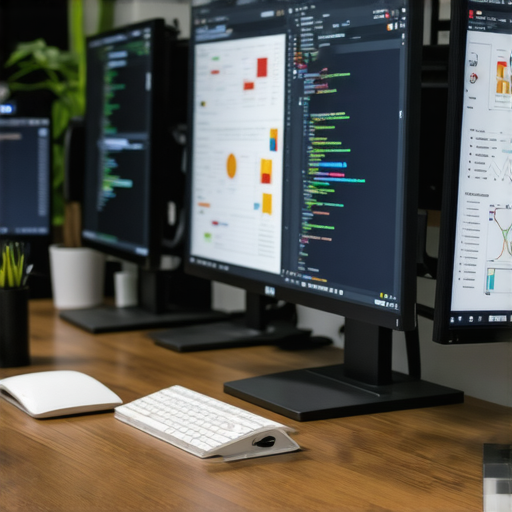

Ever spent hours tweaking a project only to find out the colors look totally different on another screen? I know that feeling all too well. I once bought a fancy monitor for my creative work, only to realize that what I saw on my screen didn’t match the client’s expectations. The colors were off, and I had to redo everything. That lightbulb moment made me realize: if I wanted to truly trust my work, I needed a monitor that delivers accurate color reproduction and stunning 4K resolution. It was frustrating, but it pushed me to explore what’s really needed in a top-tier monitor for both creative and office tasks in 2025.
Why Accurate Color and 4K Resolution Matter More Than Ever
In 2025, our screens are our windows to the digital world. Whether you’re editing photos, designing graphics, coding, or just trying to get through a mountain of emails, the quality of your monitor can make or break your productivity and output. A good 4K display with excellent color accuracy isn’t just a luxury—it’s a necessity for anyone serious about their work. According to a recent study by TechInsights, nearly 70% of creative professionals report that color accuracy directly affects their workflow and client satisfaction. But here’s the catch: many monitors claim to be top-tier, yet fall short in real-world use. I’ve made that mistake early on—trusting specs over actual performance—and it cost me time, money, and confidence.
So, how do you avoid falling into that trap? What features truly matter? And which monitors deliver the best bang for your buck in 2025? That’s what I’m here to help you figure out. Over the next sections, I’ll share practical tips, honest reviews, and my personal insights to help you choose the ideal monitor that balances color precision, resolution, and productivity. Ready to upgrade your workspace? Let’s dive in!
Is All the Hype About Color Accuracy Actually Worth It?
When I first started shopping for a professional-grade monitor, I assumed that the most expensive models would automatically be the best. Turns out, I overlooked the importance of calibration and factory accuracy, which are critical for true colors. The mistake? I bought a high-resolution monitor without checking its color gamut coverage or calibration features. That oversight meant I spent hours tweaking settings, only to find my colors still weren’t quite right. Learning from that, I now prioritize monitors with high AdobeRGB or DCI-P3 coverage and reliable calibration options. If you’re curious about the latest in color accuracy and want to avoid my initial blunders, I recommend checking out some of the top-rated options for creative work in 2025, which I’ll cover later in this guide.
Are you facing similar frustrations or doubts about whether investing in a high-quality monitor is really worth it? If so, you’re not alone. Many professionals struggle with choosing the right display, especially with so many options out there. But the good news is, with a bit of guidance, you can find a monitor that not only meets your needs but also elevates your entire workflow. Let’s explore the key features to look for and the best models available this year.
Check Calibration Tools for Precise Colors
Start with a reliable calibration device like the X-Rite i1Display Pro or Datacolor SpyderX to ensure your monitor displays true-to-life colors. I once borrowed a calibration tool from a friend and spent an afternoon running a calibration, which instantly improved color consistency. This step is crucial because factory settings often fall short of true color accuracy, especially for professional work. After calibration, compare the results with online color accuracy tests to verify your monitor’s performance. For detailed guidance, visit this resource to find top-rated calibration-ready monitors.
Adjust Settings to Match Your Workflow
Access your monitor’s on-screen display (OSD) menu and tweak the color temperature, contrast, and gamma settings. For creative tasks, set the color temperature to 6500K for neutral whites, and adjust gamma to 2.2 for standard viewing conditions. I remember a time when I spent hours tweaking these settings after calibration, and the difference was night and day. Keep a record of your optimal settings for different tasks—photo editing, coding, or office work—to switch easily. For professional accuracy, prioritize monitors with factory-calibrated profiles or those supporting hardware calibration, like the best 4K color-accurate models.
Utilize Color Profiles for Consistency
Create and load specific color profiles tailored for your workflow, whether for print, digital, or video editing. For example, AdobeRGB or DCI-P3 covers wider color gamuts, making your colors more vibrant and accurate. I once set up a custom profile for my photo editing rig, which resulted in images that looked perfect on other calibrated devices. Save these profiles in your operating system and your editing software to maintain consistency across devices. For dual monitor setups, ensure both displays are calibrated with matching profiles to prevent color discrepancies. Check out dual monitor ideas to optimize your workspace.
Test and Validate Your Setup Regularly
Regularly test your monitor’s color accuracy with tools like the BasICColor or SpyderCheckr. I schedule a monthly calibration check to catch drift over time, especially if I work with color-sensitive projects. Use online test images to verify uniformity, contrast, and color fidelity. This habit helps catch issues early and ensures your work remains consistent. Remember, a monitor that’s not regularly checked can gradually deviate, negating your initial calibration efforts. For comprehensive advice, explore the top 4K monitors for office efficiency that support easy calibration and testing.
Optimize Your Workspace for Better Color Perception
Arrange your monitor in a neutral-colored, dimly-lit environment to reduce glare and reflections that skew perception. I once tried working in a brightly lit room and noticed my colors looked off; after switching to a subdued setup, colors appeared more vivid and consistent. Use a monitor hood or anti-glare screen if necessary. Also, avoid placing your monitor near windows or direct light sources. Consistent lighting conditions are essential for accurate color judgment, especially during critical editing sessions. For ideas on workspace setup, visit dual monitor setup ideas.
Many people assume that investing in the most expensive monitor guarantees perfect color accuracy, but this is a misconception that can lead to costly mistakes. In my experience, a high price tag doesn’t automatically mean the display is calibrated for professional work. Manufacturers often ship monitors with factory settings that are far from ideal, and relying solely on the specs can be misleading. Instead, the real secret lies in the calibration process and the monitor’s ability to support hardware calibration, which is crucial for achieving true-to-life colors. For example, monitors supporting wide color gamuts like AdobeRGB or DCI-P3, combined with professional calibration tools such as the X-Rite i1Display Pro, can dramatically improve color fidelity. Check out the top-rated options for creative professionals in 2025 to avoid falling into this trap.
Another misconception is that higher resolution alone ensures better work quality. While 4K provides more detail, it doesn’t address color accuracy or uniformity. You might have a stunning 4K display, but if it can’t reproduce colors precisely or suffers from uneven backlighting, your work suffers. Many overlook the importance of factory calibration and the monitor’s support for color profiles, which are essential for consistent results across devices. For advanced users, understanding the nuances of color management—like creating custom ICC profiles—is key to avoiding errors that can compromise your projects.
One common mistake is neglecting regular calibration. Over time, monitors drift from their original settings, and without periodic calibration, your colors can become inaccurate without you realizing it. Regularly testing your display with tools like the SpyderX or BasICColor, especially before critical projects, ensures your colors stay true. Remember, a monitor that isn’t calibrated regularly can undo all your initial efforts, leading to frustration and rework.
Are you aware of how much your workspace lighting conditions influence color perception? Many underestimate the impact of ambient light, which can make colors look different from what they truly are. Properly calibrated monitors in neutral, subdued lighting conditions yield the best results. Always consider your environment when evaluating color accuracy; this is a nuance often overlooked even by seasoned professionals.
Have you ever fallen into this trap? Let me know in the comments. For more insights on choosing the best monitor for your creative or professional needs, explore our guide on top color-accurate monitors for 2025. Proper understanding of these nuances can save you time, money, and headaches, ensuring your work always looks its best.
How do I keep my monitor setup reliable over time?
Maintaining your monitor’s color accuracy, resolution, and overall performance isn’t a one-and-done task. It requires a combination of the right tools, periodic checks, and good habits. I personally use the X-Rite i1Display Pro for calibration because of its precision and ease of use. It allows me to run comprehensive calibrations every few weeks, which is crucial given how monitors tend to drift from their factory settings over time—especially with extended use or changing environmental conditions.
Another essential tool I rely on is DisplayCAL, an open-source software that works seamlessly with calibration devices. It helps me create and manage custom ICC profiles that ensure my monitor’s color reproduction remains consistent across different devices and projects. Regularly updating these profiles and comparing calibration results with online test images helps me catch any deviations early, saving me from costly rework.
Why investing in calibration hardware and software is worth it
Calibration hardware like the X-Rite i1Display Pro or SpyderX ensures your colors stay true over time, which is vital for professional work. These devices measure your display’s output and adjust the settings automatically or guide you through manual adjustments. The trend in 2025 clearly favors hardware calibration support, especially with wider color gamuts like DCI-P3 and Rec. 2020, which are becoming standards for high-end creative workflows.
As for software, I recommend CalMAN for advanced users who need detailed reports and nuanced control over calibration parameters. Its detailed analytics help me understand how my display’s performance evolves, allowing me to schedule calibrations proactively rather than reactively. This approach minimizes drift and ensures my colors remain consistent across projects and clients.
Future-proof your setup with automation and cloud backups
Looking ahead, I predict that automation tools and cloud-based calibration profiles will become more common, simplifying long-term management. Some monitors and calibration tools are already supporting automatic calibration reminders and remote profile syncing. This means you can set your workspace to self-maintain, reducing manual intervention and human error. For example, integrating your calibration software with cloud storage ensures your profiles are backed up securely and accessible from multiple devices. This is especially useful for collaborative environments where multiple professionals rely on the same color standards.
If you haven’t already, I encourage you to try setting up automated calibration alerts with your current tools. It’s a game-changer for maintaining top-tier performance without constant manual checks. For more insights on creating a seamless workspace, explore dual monitor setup ideas to enhance your productivity and workflow.
The Hardest Lesson I Learned About Professional Monitors
Early in my journey, I believed that buying the most expensive monitor guaranteed perfect color fidelity. It wasn’t until I invested in a quality calibration tool like the X-Rite i1Display Pro that I realized factory settings are often misleading. True accuracy comes from regular calibration and understanding your monitor’s color gamut coverage. My biggest lightbulb moment? Knowing that a monitor’s ability to support wide color gamuts like AdobeRGB or DCI-P3 is essential for vibrant, accurate colors, especially in 2025’s creative landscape.
My Essential Toolkit for Color-Accurate Work
To ensure consistent results, I rely on calibration hardware like the SpyderX and software such as DisplayCAL. These tools help me create and manage ICC profiles, which are vital for maintaining color fidelity across projects. Additionally, regularly testing with online color accuracy images keeps my setup reliable. For anyone serious about professional work, integrating these tools into your workflow is a game-changer for trust and precision.
Don’t Miss Your Chance to Elevate Your Workflow
If you’re ready to take your color accuracy and resolution to the next level, now is the perfect time. With innovative monitors supporting hardware calibration and wide color gamuts becoming the standard, your workspace can become a powerhouse of productivity and creativity. Remember, consistent calibration and a well-arranged workspace in neutral lighting are keys to success. Want to transform your setup? Check out dual monitor setup ideas to maximize your efficiency and comfort. Your future self will thank you for the investment in quality and accuracy.
This article hits the nail on the head about the importance of calibration and proper workspace setup for accurate color reproduction. Having been in graphic design for years, I’ve learned that even the best monitors can fall out of calibration over time, especially with frequent use. I personally rely on the X-Rite i1Display Pro and regularly test my setup with online tools to ensure consistency. One thing I’d add is the value of lighting in your workspace; ambient light can drastically affect how you perceive colors on your screen. Do others have preferred lighting setups or tips for maintaining color accuracy during long editing sessions? I’ve found that a neutral, dim environment combined with regular calibration makes a significant difference.
This post really hits home for me, especially the emphasis on regular calibration and proper workspace lighting. I’ve been working in digital art for a few years, and I’ve learned the hard way how quickly monitor drift can throw off color accuracy. I personally use the X-Rite i1Display Pro paired with DisplayCAL, and it’s been a game-changer for maintaining consistency over time. I also find that ambient light plays a huge role—working in a room with neutral, dim lighting definitely helps ensure that my colors look the same across different sessions and even when I switch between devices. Have others found specific lighting setups or workspace arrangements that help stabilize color perception during intensive editing or design projects? I’m curious about what works best in different environments to keep colors reliable, especially during long work hours.
This discussion about color calibration and workspace lighting really resonates with me. I’ve spent years troubleshooting why my color profiles looked great on one monitor but off on another, and it often boiled down to inconsistent ambient lighting or neglecting regular calibration. Since adopting a dedicated calibration tool like the X-Rite i1Display Pro and establishing a subdued, neutral lighting environment, my workflow has become much more reliable. One tip I’ve found helpful is using a colorimeter to establish a baseline for ambient light levels and ensuring my workspace environment remains consistent, especially during critical editing sessions. Do others find that their perception of color changes with different lighting conditions, even with calibrated displays? I wonder whether incorporating bias lighting behind screens could further improve color consistency. Would love to hear how others approach maintaining color fidelity in varied working environments, especially for those working long hours or in naturally lit spaces.