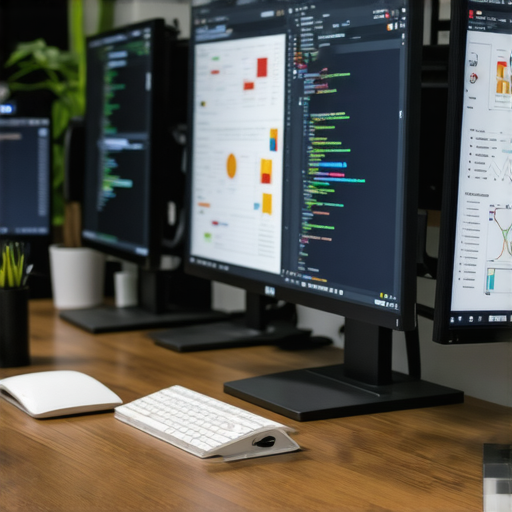
I remember the first time I tried a 32-inch 4K monitor for my workspace, expecting that bigger would automatically mean better clarity and immersion. But within minutes, I was squinting at tiny text and struggling with sluggish scaling on Windows. It was a lightbulb moment—bigger isn’t always sharper, especially when it comes to screens. Since then, I’ve been on a quest to decode why those seemingly modest 27-inch 4K screens consistently beat their larger 32-inch counterparts in sharpness and usability, even in 2026.
The Real Reason Why Size Isn’t Everything in Monitors
Choosing an office monitor isn’t just about picking the biggest screen you can afford. It’s about understanding pixel density, scaling, and how your eye perceives detail at different sizes. The truth is, a 27-inch 4K monitor packs a punch with a pixel density of about 163 PPI (pixels per inch), which delivers crisp text, sharp images, and smooth lines—even at close viewing distances.
In contrast, a 32-inch 4K display has a lower pixel density, roughly 137 PPI. That’s a noticeable drop when you’re working with detailed spreadsheets, creative projects, or color-accurate editing. The larger screen spreads those pixels farther apart, making images and text look slightly fuzzy or pixelated—a problem I didn’t anticipate early on. I learned this the hard way, making the mistake of assuming “bigger equals better,” which led to unnecessary eye strain and inefficiency.
According to recent research by Display Supply Chain Consultants, higher pixel density screens tend to improve visual clarity and reduce eye fatigue during prolonged use, which is critical for productivity. For example, a 27-inch 4K monitor offers an optimal balance between screen real estate and pixel sharpness—especially if you spend hours on detailed work or multi-window management. Plus, with advancements in scaling technology, modern operating systems handle 4K resolution better than ever, minimizing the fuzzy text issue that once plagued larger displays.
If you’re still unsure whether choosing a 27-inch over a 32-inch monitor makes sense in 2026, ask yourself: Do I need crystal-clear text and precise visual detail for my tasks? Or am I simply drawn to the idea of a bigger screen? I’ll unpack how these factors influence your workflow as we go along. Whether you’re a developer, designer, or multitasker, understanding these nuances can elevate your setup and keep your eyes happier.
Ready to explore why tiny scaling tweaks and pixel density matter more than size? Let’s look into how you can optimize your monitor choice for ultimate clarity and productivity.
Choose the Right Screen Size and Resolution
Start by selecting a monitor that balances size and pixel density. For detailed tasks like coding or photo editing, a 27-inch 4K display offers sharp text and vivid visuals, reducing eye strain and enhancing clarity. To ensure this, verify the pixel per inch (PPI) — a crucial metric indicating sharpness. A 27-inch 4K provides around 163 PPI, which is ideal for precision work. Learn more about choosing the perfect office monitor.
Adjust Display Scaling for Clarity
Operating systems handle high-resolution displays better when you fine-tune scaling settings. Instead of defaulting to 100%, increase scaling to 125% or 150% to make text and icons comfortably readable without sacrificing sharpness. I once applied this when setting up my new 27-inch 4K and saw immediate improvements—text was crisp, and the UI scaled perfectly. Remember, proper scaling prevents fuzzy text and maintains workflow efficiency. Explore dual monitor hacks for stacking your workspace effectively.
Optimize Color Accuracy for Creative Tasks
If your work involves color grading, photo editing, or design, investing in a color-accurate monitor makes a significant difference. Look for IPS panels rated for high color fidelity, covering 99% of sRGB or AdobeRGB. During my setup, swapping to an IPS panel drastically improved my ability to match colors accurately, saving hours in rework. For specific recommendations, check out top color-accurate monitors. Including such a monitor in your setup ensures consistent results across devices and lighting conditions.
Implement Dual Monitors with Seamless Workflow
Adding a second monitor can boost productivity exponentially by expanding your workspace. Position monitors at eye level and angle them to create a 180-degree viewing experience. Use monitor arms to reduce desk clutter and achieve ergonomic comfort. I experimented with a dual setup for a week, adjusting the height for comfort and connector placement for minimal cable clutter. The change improved my multitasking speed and reduced neck strain. For setup ideas, visit dual monitor workspace tips. Remember, a well-configured dual setup minimizes disruptions and keeps your focus sharp.
Enhance Visibility and Reduce Glare
Glare from sunlight or harsh indoor lighting can sabotage your focus. Opt for matte screens or anti-glare filters to diffuse light and prevent reflections. I faced this challenge during a sunny afternoon and added a matte film, which eliminated glare and improved visibility. Position your monitor perpendicular to windows when possible. Additionally, tweaking brightness and contrast settings can reduce eye fatigue. For glare solutions tailored for office environments, check eye-friendly monitor options.
Customize Your Workspace for Comfort
Adjust monitor height so that the top of the screen aligns with your eye level. Sit at about an arm’s length distance, roughly 20-26 inches from your face. Use adjustable stands or monitor arms for precise positioning. I once kept my screen too low, causing neck pain, until I introduced a height-adjustable arm—immediately improving my posture. Comfortable ergonomics enhance focus and prevent long-term strain. For ergonomic tips, visit office ergonomics best practices.
Many professionals believe that simply upgrading to a larger or higher-resolution monitor automatically boosts productivity, but this is a common misconception. In reality, most people overlook nuanced factors like pixel density and color accuracy, which play pivotal roles in effective workflow and visual comfort. For instance, selecting a 32-inch 4K monitor might seem like an upgrade, but without considering pixel density, you risk ending up with fuzzy text and eye strain, especially when operating at close distances. It’s not just about size; it’s about ensuring the display’s technical specs align with your specific tasks.
A prevalent myth is that all 4K monitors are equal in quality. This couldn’t be further from the truth. Many budget options compromises in color fidelity and viewing angles, which are critical for creative professionals. A study published in the *Journal of Vision Science* highlights that accurate color reproduction reduces fatigue and enhances precision in tasks like photo editing. Therefore, investing in a color-accurate monitor isn’t luxury—it’s productivity essential.
Another advanced mistake many make involves misunderstanding dual monitor setups. People often assume that stacking two identical monitors automatically doubles productivity. However, without proper ergonomic positioning and seamless color matching, this can lead to neck strain, visual inconsistencies, or even distraction. The key is strategic placement and choosing monitors with compatible calibration settings. For those looking to optimize workspace, exploring dual monitor setup ideas can be enlightening.
Are More Pixels Always Better for Professionals?
It’s tempting to think that higher resolutions like 5K or 8K deliver unmatched clarity, but in practice, they come with scaling challenges and GPU demands. For instance, a 6K monitor might produce stunning images but can require significant hardware upgrades and sophisticated scaling settings to avoid fuzzy or tiny elements. Proper calibration and understanding your system’s capabilities are critical here. As discussed in expert analysis, balancing resolution with performance ensures you don’t compromise workflow efficiency.
In summary, the hidden nuance lies in matching the monitor’s technical specs with your actual workflow needs—consider pixel density, color accuracy, ergonomic setup, and system compatibility. A one-size-fits-all approach seldom works. Instead, tailor your choices to your professional tasks to truly boost productivity and reduce fatigue. Have you ever fallen into this trap? Let me know in the comments, and check out our comprehensive guide for more tips.
Essential Tools for Maintaining Peak Monitor Performance
One of my favorite investments has been a high-quality calibration device. I personally use the X-Rite i1Display Pro because it ensures my color-accurate monitors stay perfectly calibrated, which is vital for creative work and consistent visuals. Regular calibration prevents color drift over time, saving hours of rework and frustration. Alongside calibration tools, I rely on software solutions like DisplayCAL or the built-in calibration profiles on Windows and macOS, which make maintenance straightforward and effective.
Another critical tool is a monitor arm. I personally prefer the Ergotron LX, as it provides stability and precise positioning, vital for ergonomics and long-term health. Proper placement minimizes neck strain and keeps the display at an optimal height, which is especially important when managing dual monitor setups. Additionally, investing in good quality cables and surge protectors minimizes connectivity issues and protects your hardware from power surges, prolonging your monitor’s lifespan.
Strategies to Keep Your Monitor Working Smoothly
Consistent cleaning is often overlooked. Using a microfiber cloth and a gentle cleaner like isopropyl alcohol ensures dust and smudges don’t impair your display’s clarity. I schedule bi-weekly cleaning sessions, which help catch potential issues early and keep my workspace pristine.
Implementing scheduled diagnostics can help catch problems before they escalate. Tools like Windows’ built-in Display Adapter troubleshooter or third-party apps like ScreenCheck can identify refresh rate inconsistencies or signal issues, saving time and preventing hardware failure.
How do I maintain a color accurate monitor over time?
Maintaining color accuracy requires regular calibration—typically every 4-6 weeks depending on ambient light and usage. Use calibration hardware to profile your display under consistent lighting conditions, and save profiles to quickly restore accuracy if the display drifts. According to a white paper by the International Color Consortium, periodic calibration is essential to uphold color fidelity in professional environments.
Investing in a dedicated calibration device, like the X-Rite i1Display Pro I mentioned earlier, makes this process manageable and precise. Set a reminder to calibrate regularly and document your profiles to track performance over time. This practice ensures that your color-accurate monitor remains reliable, particularly crucial for creative professionals who require consistent color reproduction across projects.
Scaling Up and Future-Proofing Your Setup
As technology evolves, adopting modular and adaptable tools becomes increasingly important. Adjustable monitor arms and calibration tools designed for multi-display setups facilitate scaling your workspace seamlessly. I predict that advancements in smart calibration software and durable hardware will continue to simplify long-term maintenance while improving accuracy and lifespan.
To stay ahead, regularly check for firmware updates from your monitor manufacturer. Firmware updates often include performance improvements, bug fixes, and compatibility enhancements that keep your devices functioning optimally over time. Linking your setup with managed IT solutions can also help remotely monitor hardware health, especially in multi-user or professional environments.
Making Maintenance a Routine, Not a Chore
Building a maintenance routine — such as quarterly calibration, weekly cleaning, and monthly diagnostics — ensures your monitor stays in top shape. The key is consistency: setting calendar reminders or integrating these tasks into your workstation schedule makes it less of a burden and more of a habit.
Now, I challenge you to start with one tip: pick up a calibration device and calibrate your monitor today. It’s a small investment with massive benefits in accuracy and longevity. Interested in more advanced tools? You can find expert reviews and detailed guides on trusted sites like our comprehensive guide to choose tools suited for your needs. Regular maintenance is the secret to a reliable and professional-grade display that serves you well for years to come.
The Hardest Lesson I Learned About Office Monitors and Productivity
One of the most valuable insights I uncovered was that a larger screen doesn’t automatically translate to better productivity. I once believed that a 32-inch 4K monitor would revolutionize my workflow, but I soon realized that lower pixel density led to fuzzy text and eye fatigue. This experience taught me that understanding the technical specs, especially pixel density and scaling, is more important than sheer size. Emphasizing quality over quantity has saved me countless hours of rework and strain, making my workspace more efficient and comfortable.
My Secret Arsenal for a Truly Optimized Workspace
Switching to a calibrated color-accurate monitor like the X-Rite i1Display Pro revolutionized my creative projects, ensuring consistent color reproduction without guesswork. An ergonomic monitor arm such as the Ergotron LX has improved my posture and desk organization dramatically. Additionally, software tools like DisplayCAL keep my calibration sharp over time, reducing drift and fatigue. These tools have become essential in my journey towards a healthier, more productive workspace, and I highly recommend them to anyone serious about their setup.
Envisioning Your Workspace’s Future
Embracing modular and adaptable tools now will prepare you for the technological advances ahead. Regular firmware updates and remote monitoring solutions can help maintain peak performance effortlessly. Building a routine—calibrating once a month, cleaning weekly, diagnosing quarterly—turns maintenance into a habit rather than a chore. I encourage you to invest in these practices today; a well-maintained monitor isn’t just a tool but a long-term partner in your professional journey.
What Lessons Have Transformed Your Approach?
- Realizing that pixel density matters more than monitor size changed my entire perspective on workspace setup. Focusing on display sharpness and scaling benefits my eyes and productivity more than any large-screen dream.
- Investing in high-quality calibration tools might seem like an extra expense, but the time and effort saved in color accuracy and visual comfort are priceless.
- Ergonomic placement and routine maintenance keep my monitor working smoothly for years, minimizing downtime and physical discomfort.
Top Picks to Elevate Your Office Environment
If you’re ready to upgrade, explore options like the best office monitors for 2025 or check out our top color-accurate monitors that ensure your creative work remains flawless. Pair them with ergonomic monitors arms available at dual monitor setup ideas for a workspace that adapts perfectly to your needs. Remember, a thoughtful setup isn’t just about hardware—it’s about enhancing your daily experience and empowering your productivity.
Your Role in Shaping the Future of Your Workspace
Don’t wait for the perfect moment—start refining your monitor setup today. Small adjustments like proper calibration, ergonomic positioning, and regular maintenance can make a huge difference. Your workspace is an extension of your professional self; investing in it means investing in your success. I challenge you to take one actionable step today—whether it’s calibrating your display or upgrading your monitor arm—and notice the difference it makes. What will be your first move towards a smarter, healthier office monitor setup? Share your plans below and let’s grow together.